It’s that time of year again.
Record Store Day is Saturday, April 18, and if you know, you know—the lines, the crates, the early morning coffee runs, the thrill of walking out with something you’ve been hunting for. There’s nothing else quite like it in the music world.
But every year, RSD also attracts a new wave of listeners just getting started. First-timers. People who’ve been meaning to set up a turntable for years and finally pulled the trigger. And the question they’re all asking is the same one it’s always been: Where do I even start?
For a lot of those listeners, the answer starts with Audio-Technica. Founded in 1962 by Hideo Matsushita out of a small Tokyo apartment, the company has spent over six decades doing one thing exceptionally well—making great audio accessible to everyone. Turntables, cartridges, headphones, microphones. Bedroom setups and broadcast booths. If you’ve been in this hobby for any length of time, you already know the name.
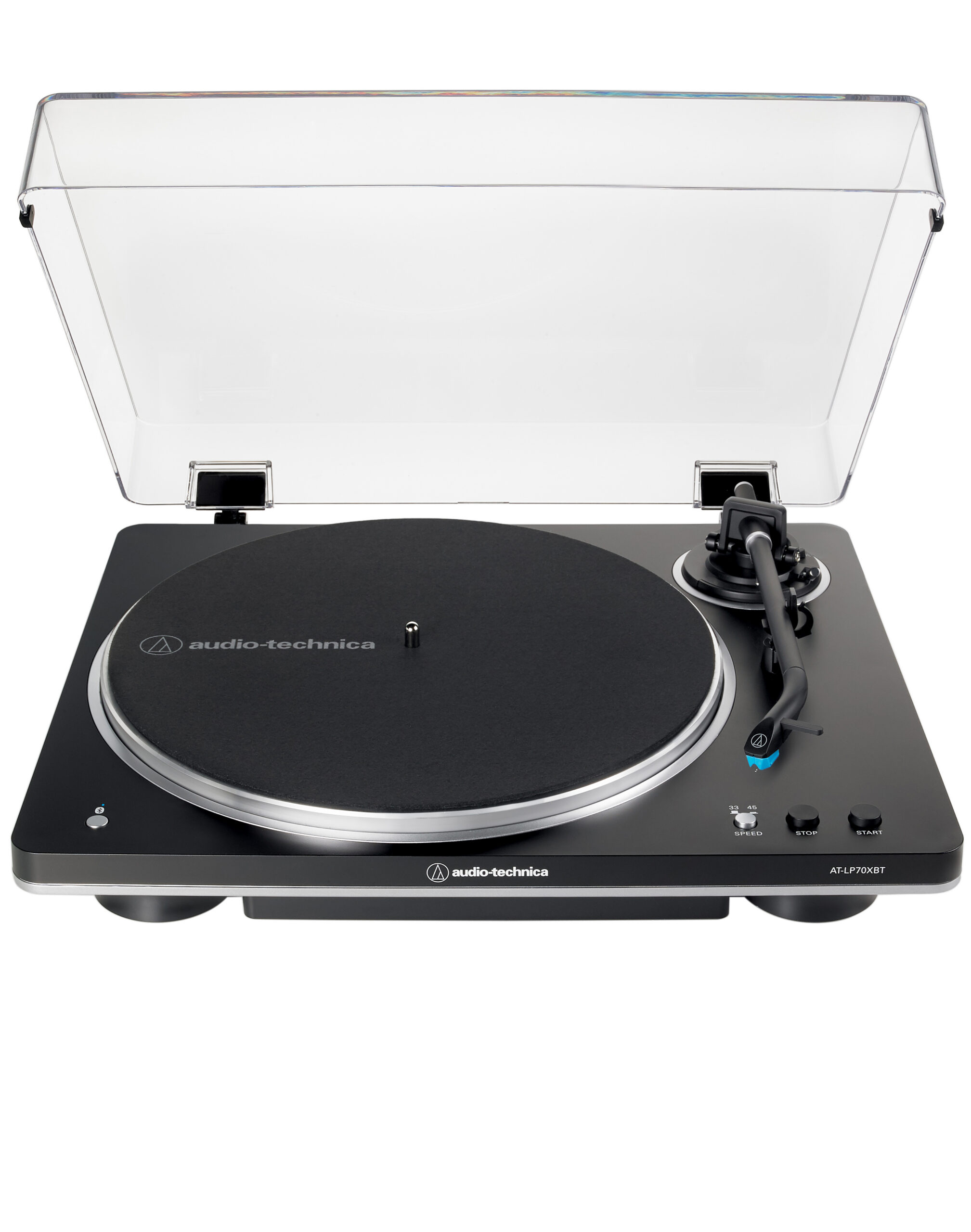
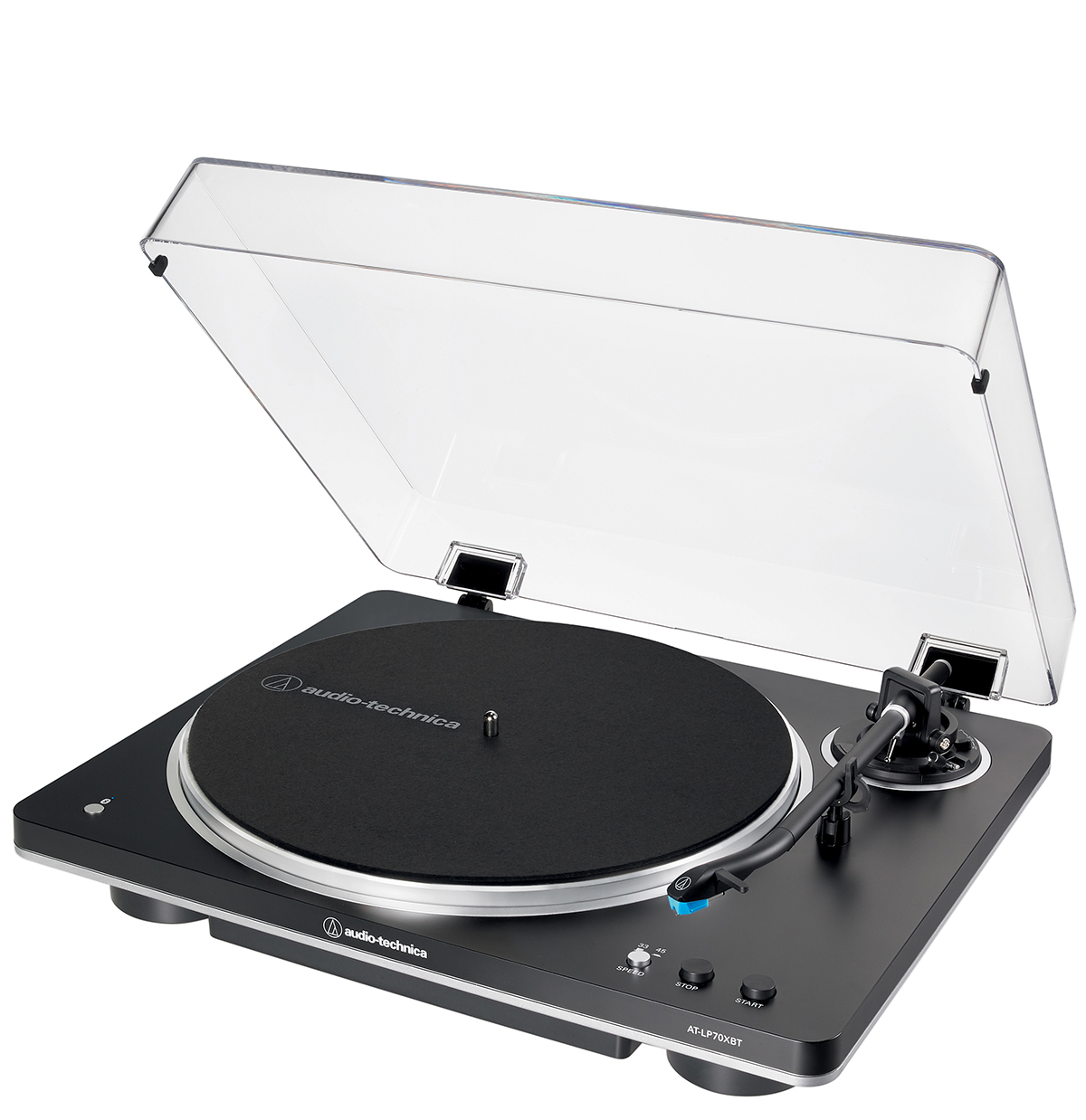
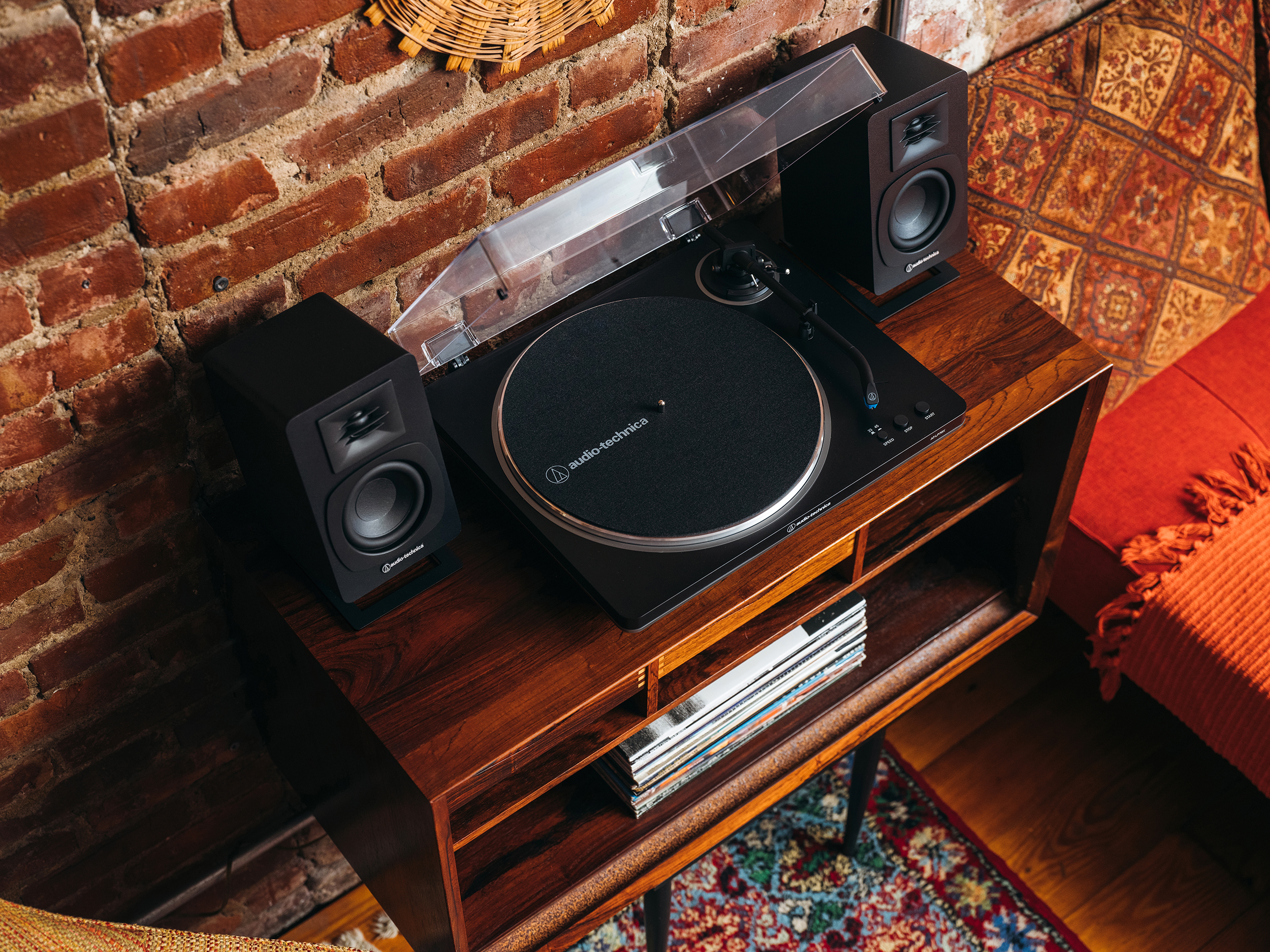
Ahead of Record Store Day, I got my hands on two of their latest: the AT-LP70XBT Bluetooth turntable and the AT-SP3X powered speakers. I also sat down with Kurt Van Scoy, Audio-Technica’s VP of Products, Business Alliances & Marketing, to talk about where the company came from, what these products are built to do, and what he makes of the vinyl moment we’re all living through right now.
No frills on the packaging—just clean, functional, and everything well protected inside. Directions were right there, easy to follow. Audio-Technica isn’t trying to sell you an unboxing experience. They’re trying to sell you a turntable. I respect that.
First thing I noticed out of the box: lighter than I expected. But don’t let that fool you—this thing is well built. Solid, confident, no wobble or flex anywhere. The hinged dust cover snapped on first try. No fussing, no loose hinges, no missing hardware. If you’ve ever wrestled with a budget table’s dust cover, you know exactly why that matters.
Setup, for a small home office situation, was genuinely painless. The AT-LP70XBT pairs over Bluetooth—no additional wires required—and the connection established quickly and without drama. In an era where “easy setup” is a marketing promise that often proves aspirational rather than accurate, this one delivered. The turntable was spinning within minutes of coming out of the box.
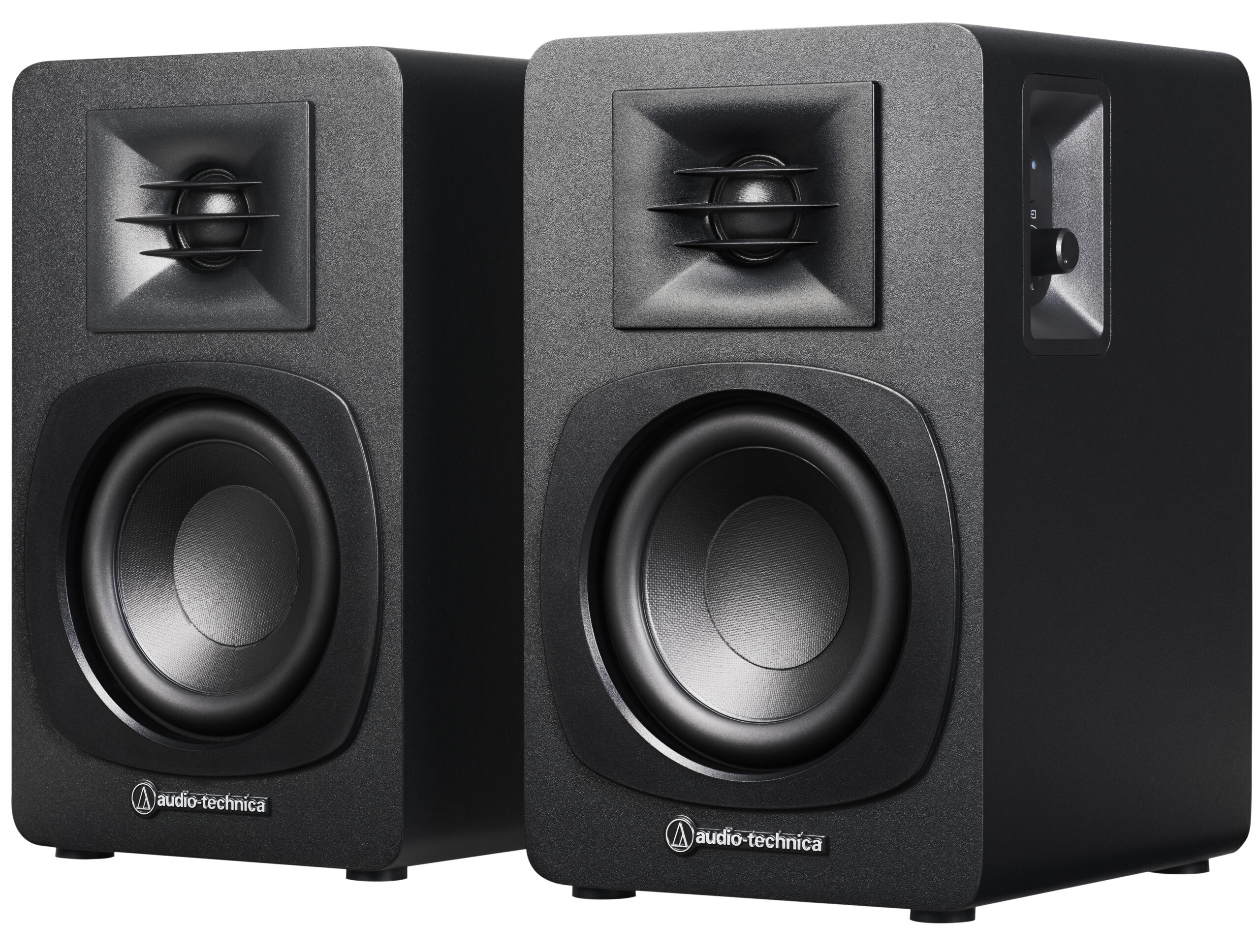
The AT-SP3X speakers arrived with the same no-nonsense energy. Clean, lightweight, and tidy in their packaging, they mirrored the turntable’s setup experience almost exactly. Bluetooth pairing was, again, genuinely effortless—though it’s worth noting these speakers are more versatile than a purely wireless solution. They can also run wired at the user’s discretion, which means they’ll work beautifully in an analog chain as well as a wireless one. For a speaker at this price point, that flexibility matters.
One small but meaningful upgrade was already in place before the needle ever touched vinyl. The AT-LP70XBT ships stock with the AT-VMN95C conical stylus—and honestly, for a lot of listeners, that’s perfectly fine. But I had swapped it out for the AT-VMN95E, the next step up in the VM95 Series, and I’m glad I did.
Here’s why it matters: the conical tip rides the groove at a single rounded contact point, which is great for durability and forgiving on rougher pressings, but it leaves detail on the table. The elliptical profile is narrower front-to-back, which means it digs deeper into the groove wall on both sides and picks up more of what’s actually in there—more high-end air, tighter imaging, a wider sense of space around the instruments. On a hard-driving live record, you feel that difference immediately. And the swap itself? Pop the old one off, press the new one on. Done. That’s the whole point of the VM95 system—you don’t have to start over to move forward.
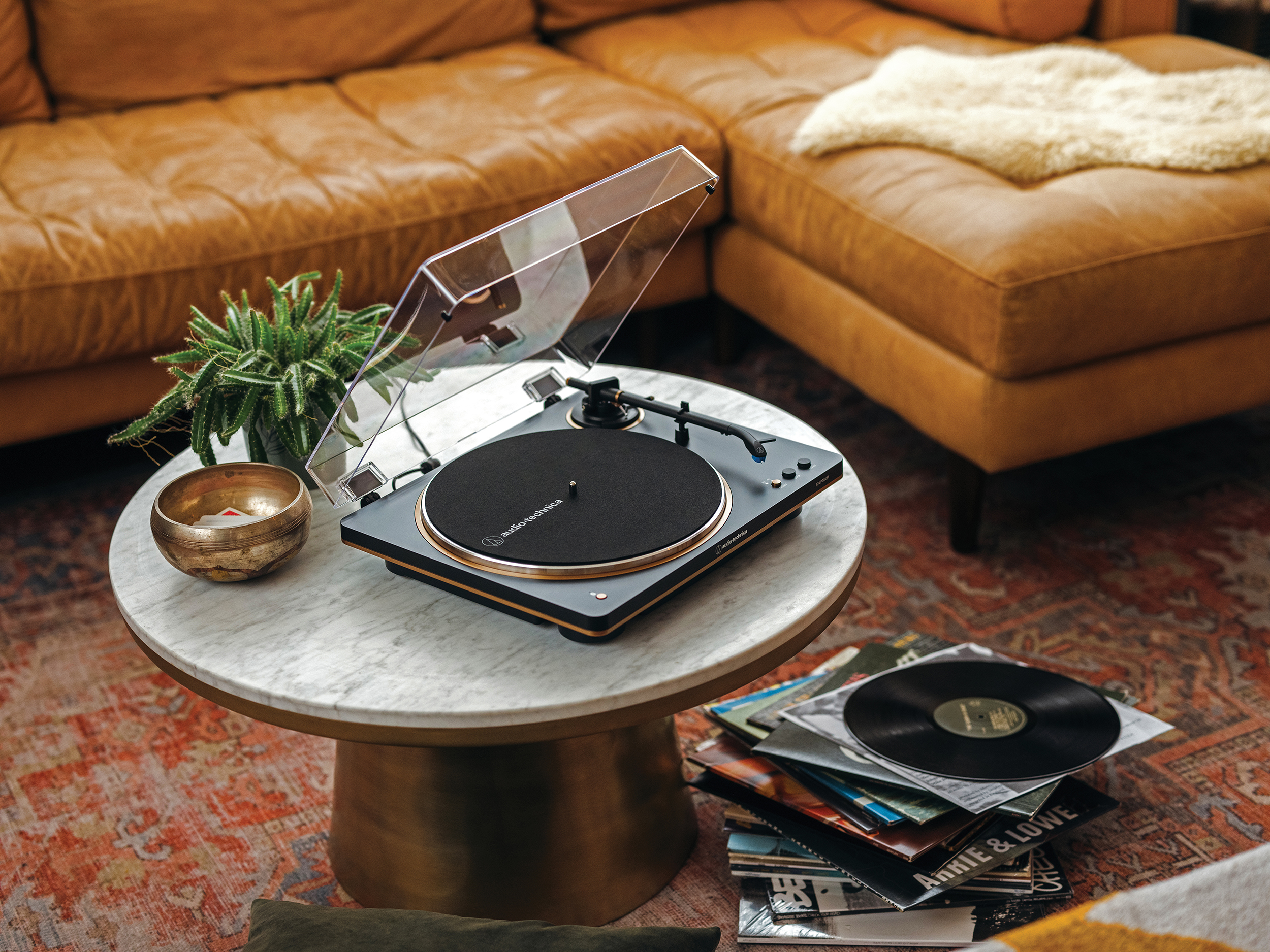
The first record on the platter was a copy of Iron Maiden’s Live After Death—the classic 1985 live double album—gifted by fellow vinyl aficionado Chris Loomis. It was a fitting choice. Few records demand more of a playback system than a hard-driving live recording with a packed low end, surging crowd noise, and Bruce Dickinson’s voice cutting through the mix like a spotlight.
Through the AT-SP3X speakers, the combination held together remarkably well. The speakers delivered a solid punch with real output—more presence and dynamic range than their modest footprint might suggest. “The Trooper” and “Aces High” sounded immediate and alive in a compact office environment. Not audiophile-grade revelatory, but honest and engaging—exactly what you want from a turnkey starter system.
We caught up with Kurt Van Scoy, Audio-Technica’s VP of Products, Business Alliances & Marketing, to dig a little deeper—into the company’s origins, the thinking behind these products, and what he makes of the vinyl moment we’re living in.
For those who may be hearing the Audio-Technica name for the first time, can you give us a quick origin story? Where did the company start, and what’s the throughline from 1962 to today?
Audio-Technica started in a small Tokyo apartment, where our founder Hideo Matsushita developed the first truly affordable phono cartridge, the AT-1. Affordable options didn’t exist at the time, inspiring him to create a product that was accessible to all. We still develop with this same ethos and remain a family business to this day.
Audio-Technica shows up everywhere from bedroom setups to professional broadcast booths. How do you describe the company’s core identity when the range is that wide?
We provide high-quality audio for everyone. No matter what your budget or use case is, we have something for you. Whether you’re a commercial audio integrator, live sound engineer, or just listening to your records at home, we aim to create products that give you the best possible listening experience.
The company was founded as a cartridge manufacturer. How much does that DNA still shape the way you approach turntable development today?
At our core, we’re a transducer company—designing products that convert one form of energy into another with the highest level of fidelity possible. It was a natural progression for us to move from cartridges to headphones, to microphones, and turntables. Cartridges are still a big part of our business and an important part of who we are.
Let’s talk about the AT-LP70XBT. It’s positioned as a step up from the LP60X. What specific decisions went into making it feel like a genuine upgrade while keeping it friendly for someone just getting into vinyl?
The AT-LP70XBT was designed to be a product that blends simplicity and flexibility. We wanted the ease of use that the AT-LP60X provides, but with an integrated VM95 Series cartridge that introduced and encouraged people to experiment with different stylus shapes, allowing a novice audiophile to explore the different characteristics of each stylus option. We understand the world of cartridges and styli can be overwhelming, so we worked to make the journey as simple as possible.
The VM95 cartridge is really central to the LP70XBT’s long-term value. Can you walk us through the upgrade path a listener might take with styli as their ears and tastes evolve?
Our VM95 Series is our most popular line of cartridges, with six different styli options: conical, elliptical bonded, elliptical nude, microlinear, Shibata, and a 3.0mm conical for 78 RPM records. Each shape excels at different things and has its own benefits.
Bluetooth turntables are sometimes a controversial subject among purists. How do you balance the convenience needs of new listeners with the expectations of more seasoned ones?
We didn’t want connectivity to be a barrier to entry for vinyl listeners. We found some people don’t have the space, budget, or desire to have extra equipment in their system. Bluetooth gives listeners the flexibility to enjoy vinyl however they’d like.
Tell us about the AT-SP3X speakers—they can run wired and wireless simultaneously, which is a clever design. What problem were you really trying to solve there?
Though we designed the AT-SP3X primarily as a turnkey solution for our turntable users, we wanted them to be multipurpose. We understand people are doing more than listening to vinyl. You may want to go analog with your turntable but still enjoy the flexibility of streaming from your computer or phone. These speakers give you the option to do both.
When you pair the LP70XBT and the SP3X together as a turnkey vinyl solution, who exactly is that listener you had in mind?
I always recommend this solution to someone looking for something budget-friendly and simple, but flexible enough to carry them through years of listening.
New vinyl buyers are coming into the hobby in waves right now. Are they approaching it differently than listeners did five or ten years ago, and how does that shape the products you develop?
I think many of today’s newer buyers are interested in owning a physical copy of the music they purchase, rather than just a digital version. The artwork, liner notes, and additional information that come with an album can offer deeper insight into an artist’s background and creative process. There’s also a strong artistic and tactile appeal to physical media that resonates with a lot of music lovers.
Record Store Day is coming up on April 18th—one of the biggest moments of the year for the vinyl community. How does Audio-Technica think about its role in that celebration, and does an event like that influence how you develop or position products like these?
Any day is a good day to browse and buy music! Audio-Technica will be releasing a limited-edition turntable to help support independent record shops, especially for listeners who are looking to start their vinyl journey or upgrade their current setup.
There’s an ongoing debate that never seems to settle—vinyl vs. digital. Where do you personally land on that?
It’s definitely a debate that never ends, and opinions vary widely. At the end of the day, I always tell people to enjoy music however they want, in any format that works for them. Personally, I’m partial to albums and the craft of continually fine-tuning my system. That process brings me closer to the music and allows for a more critical listening experience. It highlights the benefits of cartridge selection, proper setup, and maintenance—all worth spending some time learning.
For a first-time buyer who’s never heard of Audio-Technica, what would you want them to know before they make their first purchase?
Start with something you can afford. Audio-Technica offers a wide range of turntable models and cartridges that allow you to upgrade and improve your experience over time. I generally recommend component-based turntables for first-time buyers. The last thing I want is for someone new to vinyl to have a negative experience because they chose a low-quality, all-in-one model. We want that first experience to be impactful and intriguing, so people become collectors and truly enjoy the craft.
What’s something about either of these products that you think most reviewers miss or underestimate?
The build quality—especially for an automatic turntable—and the overall value Audio-Technica delivers are often underestimated. We also offer a very approachable upgrade path through interchangeable cartridge styli for users who want to experiment with different profiles. With the SP3X, it really comes down to value, sound quality, ease of use, and flexibility. We also stand behind everything we sell with an excellent warranty. Some people criticize the integrated cartridge and preset tracking force, but you really need to hear it to believe it. The speakers deliver a solid punch with plenty of output for enjoying music in real-world listening environments.
We have to ask, what does your own record collection look like?
My collection spans a wide range of genres—rock, jazz, metal, R&B, country, classical—just about anything that catches my interest. It includes everything from very old pressings to newer releases, in both albums and singles. I originally started collecting singles when I purchased an older jukebox to restore and use in my home.
Any hidden treasures or surprising titles in the crates?
I do have several Telarc albums that Audio-Technica US distributed in the late ’70s and early ’80s, and they’re among the best pressings I’ve ever heard. I also recently found a first-pressing Eric Clapton album from Germany that’s exceptionally well mastered. During a listening session in New York City, Jim Anderson gave me a copy of Patricia Barber’s Clique—the track “My Town” is a great system test. If your setup can handle the dynamics, you’re in good shape. I also regularly rely on Jennifer Warnes’ Famous Blue Raincoat for evaluating speakers and headphones—it’s just a stellar recording.
Look, there’s no shortage of turntable options out there right now—budget tables that cut corners, boutique rigs that cost more than your rent. Audio-Technica has always threaded that needle better than just about anyone. Real build quality. Real upgrade potential. Real value. And after spending time with the AT-LP70XBT and AT-SP3X together, that reputation holds up.
Is this the last setup you’ll ever own? Probably not. But as a place to start—or to come back to after time away—it’s genuinely hard to beat. Easy setup, honest sound, and a cartridge system that grows with you. That’s exactly what this hobby needs more of right now.
Happy Record Store Day, everyone. Get out there, support your local shop, and find something you love.