To kick off the week, here are ten of the finest box sets or expanded releases of 2025.
 10. Clikatat Ikatowi, The Trials and Tribulations of… (Numero Group) Post-hardcore emerged in the 1980s (DC, Louisville, Chicago, Boston) as young musicians gained adeptness on their instruments and became frustrated with the stylistic restrictions on the right side of the hyphen. However, this new genre really flourished in the decade following as a younger generation absorbed the foundational post-hardcore records and caught the bands (that didn’t quickly break up) on tour.
San Diego was a bit of a hot spot of ’90s post-hardcore, and across this superb 3LP set, the city’s Clikatat Ikatowi brandish a highly consistent style with roots in records issued by the Touch and Go (Slint) and Homestead (Honor Role, Squirrel Bait) labels. An even bigger influence is the Dischord scene, which continued to hone post-hardcore deep into the ’90s alongside these more youthful upstarts. Any of the cuts on this superb collection would’ve fit nicely onto a ’90s-era compilation on Kill Rock Stars or an ’00s release on Troubleman Unlimited.
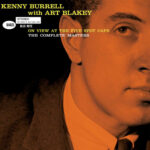 9. Kenny Burrell with Art Blakey, On View at the Five Spot Cafe: The Complete Masters (Blue Note) This is the second, and one would assume, given the titular addendum (although one can never be sure), final expansion of performances originally recorded in 1959 and released the same year. Capturing guitarist Burrell in the midst of a fertile creative stretch, these 14 selections across three LPs alternate a quintet with tenor saxophonist Tina Brooks, pianist Bobby Timmons, bassist Ben Tucker, and drummer Blakey with a quartet where Brooks lays out, and Roland Hanna takes Timmons’ spot.
The music these groups delivered to the Five Spot’s audience wasn’t perfect, in large part because the club’s piano was out of tune; so it was in ’59, and so it remained two years later when Eric Dolphy’s At the Five Spot was recorded, a profound gesture of disrespect during jazz’s supposed heyday. But Timmons and Hanna largely overcome this obstacle (as does Mal Waldron on the two Dolphy volumes), with Hanna particularly impressive in the quartet configuration. Blakey is his usual solid self, as is Tucker. Getting to hear more from the under-recorded Brooks is a treat. But it’s really Burrell’s show. He never lays a note wrong.
 8. Xmal Deutschland, Gift: The 4AD Years (4AD) Formed in 1980 in Hamburg, Germany, with an all-female lineup, Xmal Deutschland emerged as part of the Neue Deutsche Welle scene, releasing their first single on the NDW-affiliated ZickZack label. That means Xmal is aptly categorized as post-punk, but it was a Goth orientation that surely attracted the band to 4AD’s owner-operator Ivo Watts-Russell and, by extension, landed them in late ’80s US import bins.
The most sensible comparison is Siouxsie and the Banshees, but Xmal had a harder edge that underscored a disinterest in imitation. Still, far too many prospective listeners, at least in the US, were dismissive of Xmal as the Goth genre became near-synonymous with poser-dom. That’s silly, and this set, which rounds up everything the band recorded for 4AD (that’s two LPs and two EPs inside ’83-’84), makes a strong case for Xmal as residing near the head of the original gloom-merchant class.
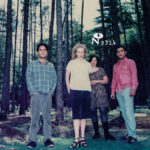 7. Ida, Will You Find Me (Numero Group) Marking the quarter century anniversary of what was to be Ida’s major label debut (for Capitol), the fourth album by this enduring New York City band (properly released by Tiger Style in 2000) gets a massive expansion, available either as a four LP or five CD set, with the latter holding a whopping 103 tracks (the vinyl comes with a download of the entire kaboodle).
It’s too often the case that a musical act’s major label debut connects as a disappointment, but in this almost instance, Ida was clearly bringing their best record to the (turn)table. That the deal fell through is almost certainly for the best, because Will You Find Me could’ve easily gotten lost in the shuffle, and then possibly stuck in legal purgatory. It didn’t; instead, it landed as a creative breakthrough. It’s a record wholly deserving of this bold enlargement, which is the dictionary definition of deep dive.
 6. Freddie Hubbard, On Fire: Live from the Blue Morocco (Resonance) Trumpeter Freddie Hubbard has received a ton of flak (maybe not as much since his passing in 2008) for his craven late-career commercial tendencies, which, to be fair, did result in some uninspiring and occasionally just plain bad music. But Hubbard did play on masterful exploratory records by Ornette Coleman and John Coltrane and Oliver Nelson and Eric Dolphy and Andrew Hill and Sam Rivers, so it’s pretty obvious it all evens out (to say the least).
But Hubbard, as a leader, was, for a significant portion of his career, a consummate communicator from inside the post-bop tradition, or better said, an extender of the possibilities of the tradition, which this exquisite live set makes abundantly clear. Extend? This collection delivers a masterclass in how to productively stretch out (“Bye Bye Blackbird nearly hits 24 minutes). Bennie Maupin on tenor sax, Kenny Barron on piano, Herbie Lewis on bass, Freddie Waits on drums, and of course, Hubbard blowing loud and strong. A fair amount of boundary pushing is happening across the selections, but it’s done with subtlety and panache, which was Hubbard’s way when he was calling the shots.
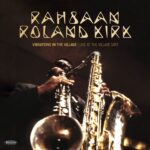 5. Rahsaan Roland Kirk, Vibrations in the Village – Live at the Village Gate & Seek & Listen – Live at the Penthouse (Resonance) These releases, each a 2LP set, technically don’t belong on this list, but, produced under the auspices of Zev Feldman, they were issued on the same day and it’s difficult to imagine a dedicated fan picking up one set and leaving the other in the racks (but naturally, record collecting is rarely as tidy as that).
 Now, if one of these performance documents were significantly (or even slightly) preferable to the other, then pairing them wouldn’t’ve been such a good idea. But really, after time spent with both in close proximity, they are frankly difficult to consider separately (down to Kirk singing different songs on both). The Village Gate band has Henry Grimes on bass, Sonny Brown on drums, and either Horace Parlan, Melvin Rhyne, or Jane Getz on piano. Penthouse has Steve Novosel on bass, Jimmy Hopps on drums, and Rahn Burton on piano. Taken together, they present Kirk as a total package of creativity.
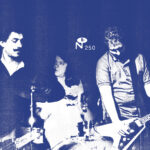 4. Hüsker Dü, 1885: The Miracle Year (Numero Group) Perhaps because they were surrounded by bands that were more formally daring (Sonic Youth, Mission of Burma, Big Black), Hüsker Dü has sometimes taken back seat in the 1980s u-ground rock mythology. Of course, this really depends on an individual’s perspective, as the trio’s discography remains a foundational text in how to lay down the hardcore-era punk scorch with non-trite melodicism while being instrumentally limber (in the manner of the great rock trios).
Directly related to Hüsker’s formal achievement is the high number of subsequent bands that directly swiped their sound. By comparison, far fewer aped Sonic Youth or Minutemen or Big Black. And so, it was also easy to get fatigued by the sheer impact Hüsker Dü had on the scene. Yes, it was all a long time ago, but hierarchies can become codified over time. Packed from start to finish with blazing performances, 1885: The Miracle Year is a glorious perspective corrector, particularly for anybody who tuned out after Zen Arcade.
 3. The Dream Syndicate, Medicine Show: I Know What You Like (Deluxe Edition) (Fire) Speaking of reevaluation, this here’s a record that’s long overdue for a fresh consideration, especially as it’s been difficult to hear for a long while, at least for those who never picked up a physical copy when it was frequently found (it’s since become scarce in the bins). The core album in this 4CD expansion leaned into the Americana sound before it was firmly established as a genre. It was tough, thoroughly rocking Americana, but it still garnered a mixed reaction from critics and fans. A bigger problem was that their move to A&M Records didn’t sell.
Many fans missed the Velvets in the equation, and for a long time, the one song that folks would think of when thinking about Medicine Show was the one that upped the mid-’70s Lou Reed swagger, “Talking John Coltrane Stereo Blues.” There are many versions of that song included in this set, with fascinating differences, but the whole thing is a treat. It solidifies Medicine Show as a neglected classic and the Dream Syndicate as one of the USA’s greatest bands.
 2. The Blasters, An American Music Story: The Complete Studio Recordings 1979–1985 (Liberation Hall) The Blasters didn’t play Americana; they played, per the title of this absolutely essential collection, American Music. Those familiar with the band will understand that the distinction is more than simply deferring to the preferred nomenclature of the band (that’d be guitarist-vocalist Phil Alvin, guitarist Dave Alvin, bassist John Bazz, and drummer Bill Bateman, with Gene Taylor on piano and Lee Allen and Steve Berlin on horns).
The Blasters were specialists in conjuring the essence of numerous roots styles from the USA, including, but not limited to, assorted strains of R&B and C&W, as well as raw blues. They could play rockabilly, too, but it was their range that made The Blasters a far more appealing proposition than the typical neo-rockabilly (or psychobilly) act. Theirs wasn’t roots demolition, as they were punk adjacent, not punk in execution, but the stuff was so high energy it’s ultimately splitting hairs. And it all came out sounding like The Blasters.
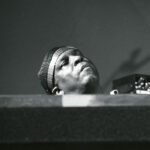 1. Sun Ra, Nuits de la Fondation Maeght (Deluxe Edition) (Strut) As issued in two truncated volumes by the Shandar label in 1971, the performances documented in this limited 6LP set have been an important part of the Sun Ra discography, both historically, as the concerts were the first the Arkestra had played outside North America, and in terms of musical quality.
Part of a festival held at the museum Fondation Maeght in the southeast of France that also featured performances by Albert Ayler, Cecil Taylor, and La Monte Young and Marian Zazeela, this expanded dive into a (inter)stellar Arkestra lineup in exquisite form stands as a prime example of thriving late 1960s-early 1970s avant-garde art from the USA finding greener pastures on foreign shores. This expansion deepens and sweetens an already magnificent excursion into the brilliance of Sun Ra.