I was going to write about kittencore, which is a real sub-genre of screamo, the mere thought of which cracks me up, and then I was going to write about mallcore because it’s a real thing too and has to be the funniest sub-sub-sub-sub-genre (of screamo again) in the history of humankind. But in the end, I decided to write about The Clean, because they hail from New Zealand, where screaming is considered a breach of decorum.
Oh, and they’re a great band, nice Dunedin lads who’ve probably never screamed in their lives, and they have a melodic lo-fi thing going on with some guitar jingle-jangle and hints of a drone and occasional guitar workouts of the sort that let you know they’re familiar with a certain little-known group from far-from-Kiwiland New York City called the Velvet Underground. Why, Robert Christgau went so far as to call them “garage Velvets.”
But that’s extremely reductionist—they’re an eclectic’s dream and do all sorts of other things. Occasionally, they break out the Farfisa organ, and I even hear Joy Division in one of their songs. And they’re not scowling nihilists, as is evident from the lines from “Point That Thing Somewhere Else” that go, “Anything could happen, and it could be right now/And the choice is yours, so make it worthwhile.”
The Clean were formed in 1978 and are often credited with founding indie rock. I have no idea if this is true. It sounds like a gross simplification to me. But if so, I suspect they could be directly responsible for the Smashing Pumpkins. If I were certain about it, I’d dock them half a grade.
What’s indisputable is The Clean were instrumental in putting Flying Nun Records (and New Zealand) on the map, and they did it in a startlingly brief amount of time—come late 1982 they called it quits after releasing nothing but a pair of singles and two extraordinary EPs, 1981’s “Boodle Boodle Boodle” and the following year’s “Great Sounds Great, Good Sounds Good, So-so Sounds So-so, Bad Sounds Bad, Rotten Sounds Rotten.”
They fall into the Great Sounds Great category.
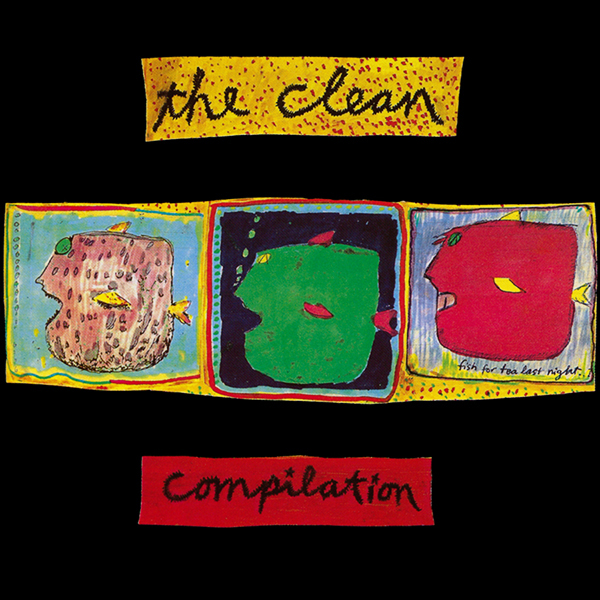
Fortunately for all of us, the quartet, which went through several line-up changes but was led by brothers David (guitar/vocals) and Hamish (drums/vocals) Kilgour, reunited as a trio in 1988. Almost as fortuitous was Flying Nun’s 1986 release of Compilation, which collects the singles and all but one song from the EPs.
Singers who make no effort to sing well; an absurdist sense of humor; innate good nature; ramshackle but always charming and seductive songs with (mostly happy-making and sometimes psychedelic-tinged) melodies that never fail to suck you in; an amateur approach that hides a certain musical sophistication—these were the hallmarks of the early Clean, and they’re evident on every song on Compilation. Along with the propulsive Velvets-influenced numbers, of course.
What’s missing? Punk. They’ve got the DIY thing down pat, but they lack the snotty attitude and have zero gob factor. They don’t sound like they hate you or anyone else. They sound like they want to be your friend. And they sound like people you would like to have as friends. You could help them wash their car. I’m sure it’s a real beater.
Most importantly, they didn’t sound like anybody else at the time. And blessedly, they didn’t come across as careerists, like they were only in it for the money and the fame. Quite the opposite. They seemed refreshingly lacking in ambition—they give you the distinct impression they’re playing music because they can’t think of anything else (or have nothing else) to do. They remind me, in this way as well as others, of Arizona’s Meat Puppets.
That beater I talked about up there? That’s them. Their songs may have dents and may not run as purrily as Lamborghinis, but they have surprising get-up-and-go. Maybe not the first Feelies album get-up-and-go, but their songs certainly motivate. And then there’s the whimsy. It’s there in spades on their first single, “Tally Ho!,” which features cheery vocals and runs mainly on the happy-go-lucky Farfisa of early bassist Peter Gutteridge, who would soon go on to help found The Chills.
And talk about precocity; Gutteridge was only seventeen when he wrote—or co-wrote, according to the credits—the can’t-take-your-ears-off-it “Point That Thing Somewhere Else,” a fast-paced Velvetoid ax rampage with drone-inducing Mo Tucker drums and vocals that project about maybe a foot. There’s “retiring,” and then there’s “I hope no one hears me.”
Keyboards also propel the altogether charming and utterly irresistible “Beatnik,” a simple ditty that’s as up-tempo as it is silly. Oh, and it features the great line, “Well, is it wrong or is it right, to be a beatnik?” The lead singer comes in too early, then clams up, goes “ch-ch-ch-ch-ch” because I’m sure he thinks it’s funny. Play it at your next party and become the envy of your friends.
More keyboards open “Slug Song,” which features primal drumming, some tortured (as in straining to sing but failing) vocals, and bops along in a friendly manner. “Well, anyway,” says the singer conversationally several times, that is, when he isn’t repeating “Your mind” like 80 times, as in don’t change it. And sometimes he just talks randomly over one really quite beguiling melody.
The instrumental “At the Bottom” is pure Joy Division with heavy bass and a very scratchy guitar—it’s basically a guitar showcase that is as impressive as it is raw. “Fish” is also an instrumental and guitar work-out from beginning to end, and I love everything about it but its brevity.
“Flowers” is a slow one with Mo Tucker drumming that has the lead singer sounding actually thoughtful and features some guitar playing that borders on the psychedelic. They even add some nice feedback.
The wonderful “Oddity” is loud and features great power chords; the lead singer has to practically shout to be heard over the din. Even so, the lyrics are “Louie Louie” indecipherable—“It’s okay, it’s all right” and “Oh yeah,” are about all you can make out, along with “It’s an oddity, it’s true, oh yeah.”
“Whatever I Do Is Right” also features an organ and sounds like it’s about to fall apart from beginning to end, but the shoddy workmanship is winning as the lead singer goes from singing “Whatever I do is right” to “Whatever I do is wrong,” which is quite profound if you ask me. And like on all of their songs, you have a hard time figuring out exactly what it is that makes the song so damned great. I can only use the overused word charming—The Clean’s refusal to polish their sound (this one sounds like a demo) is irresistible.
“Billy Two” is all quasi-R.E.M. strummed guitar and proceeds at a breakneck pace, with the lead singer singing or maybe talking the lines, “Going Billy/Hail Billy/Oh Billy/Uh huh, uh huh.” Meanwhile, the guitar threatens to go full psychedelic but never does, probably because (and I could easily be wrong about this) The Clean don’t seem the acid-taking types.
“Getting Older” opens with a big drum bash and a primal guitar assault that suddenly shifts into Mekons’ “Memphis Egypt” territory before the singer comes in. He shouts, “1, 2, 3, 4″ a couple of times in the middle of the song, which I find amusing, but for the most part, he can’t be bothered to enunciate—I hear the word “kitchen” once or twice, but otherwise, he could be speaking Esperanto. But you don’t really have time to think about it—the drums and guitar (and towards the end some random noise) are driving you along too fast.
You could call “Anything Could Happen” their signature song, and there are good reasons to do so. It has a simple charm and stealth drive, and the singing is both conversational and strangely mesmerizing. There’s no real verse/chorus structure to stop the forward thrust, and the lyrics are as offhand and tossed-off as ever and include the great lines,
“Well come on, Doctor, won’t you gimme a shot?
I’m feeling cold, boy, feeling hot
Doctor said, “No, boy, you gotta learn
First I’ll shoot up and then it’s your turn.”
Who cares if it’s virtually impossible to tell if it’s a decadent Velvets-school song about drugs? Or that far stranger thing, a decadent Velvets-school song about drugs with a positive message? There’s that “Anything could happen, and it could be right now/And the choice is yours to make it worthwhile,” a sentiment you won’t find in “Sister Ray.”
It can be hard now to recognize how revolutionary the music of The Clean was, what with thousands of subsequent bands following suit. But it’s easy to recognize the many things that make The Clean a great band. Their shambolic approach to recording—and their utter refusal to polish their vocals—made you feel like you could be a rock star too.
And their seemingly innate ability to write melodies that are instantly appealing is, in a strange way, the perfect complement to their hard-won amateurism. The fact that they could take the Velvets’ sound and make it their own won hearts and minds. They could drive it home with their guitars. They kept things moving.
They made it all look so simple and organic and effortless. They just seemed to be fucking around and having fun. And that sort of thing is contagious.
GRADED ON A CURVE:
A