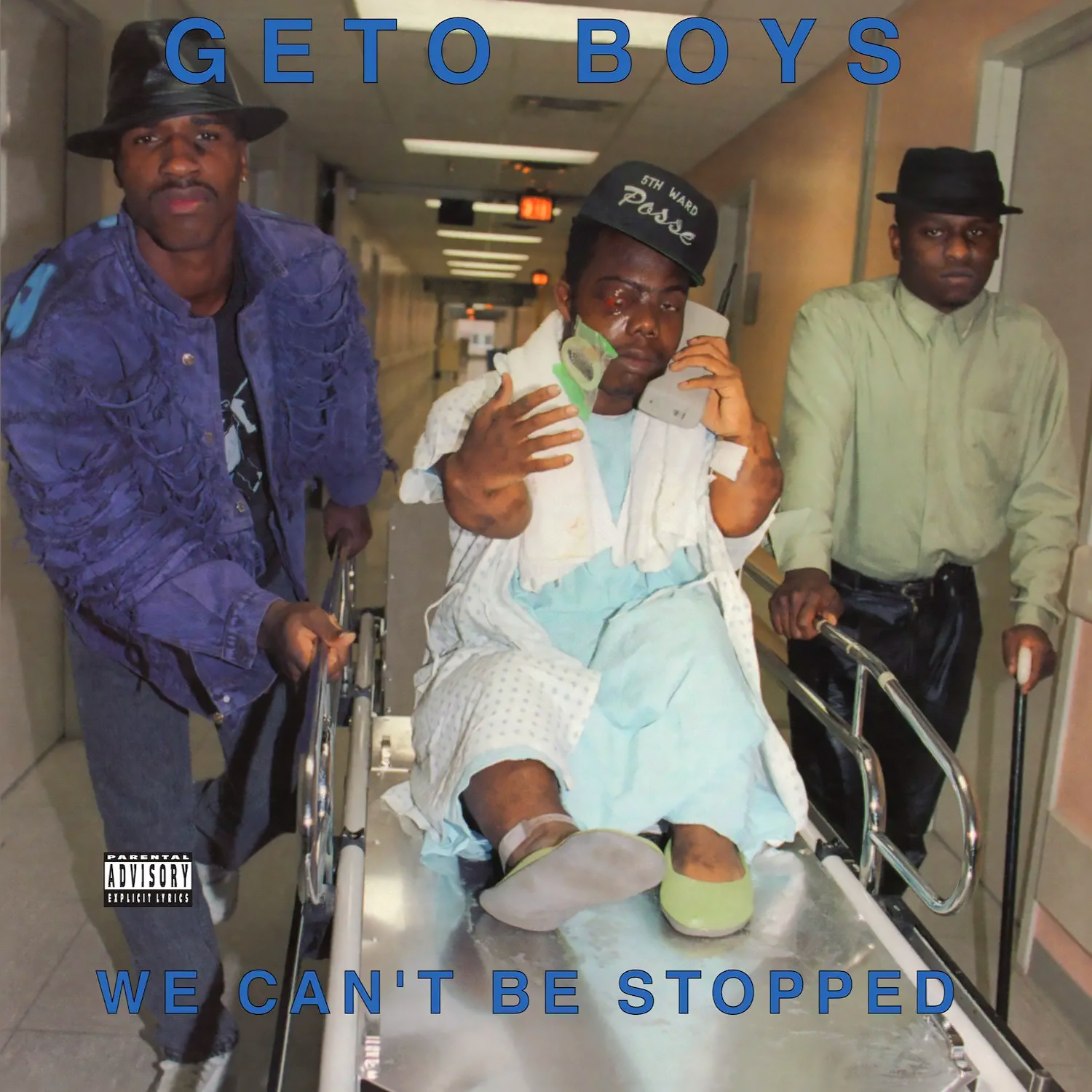
You know the cover before you know the record. Bushwick Bill on a hospital gurney, eye bandaged, Willie D and Scarface wheeling him down the corridor, all three staring straight down the lens. No album art has ever dared you harder to press play.
But it was neither a costume nor a concept shoot. That was the worst night of a man’s life, and Bill said years afterward that it still hurt to look at the cover, that he had gone along with it and came to feel it was wrong. He deserved to be known for far more than his darkest hour, and he was—a Jamaican-born kid out of Brooklyn who grew into one of the most magnetic voices this music has ever produced.
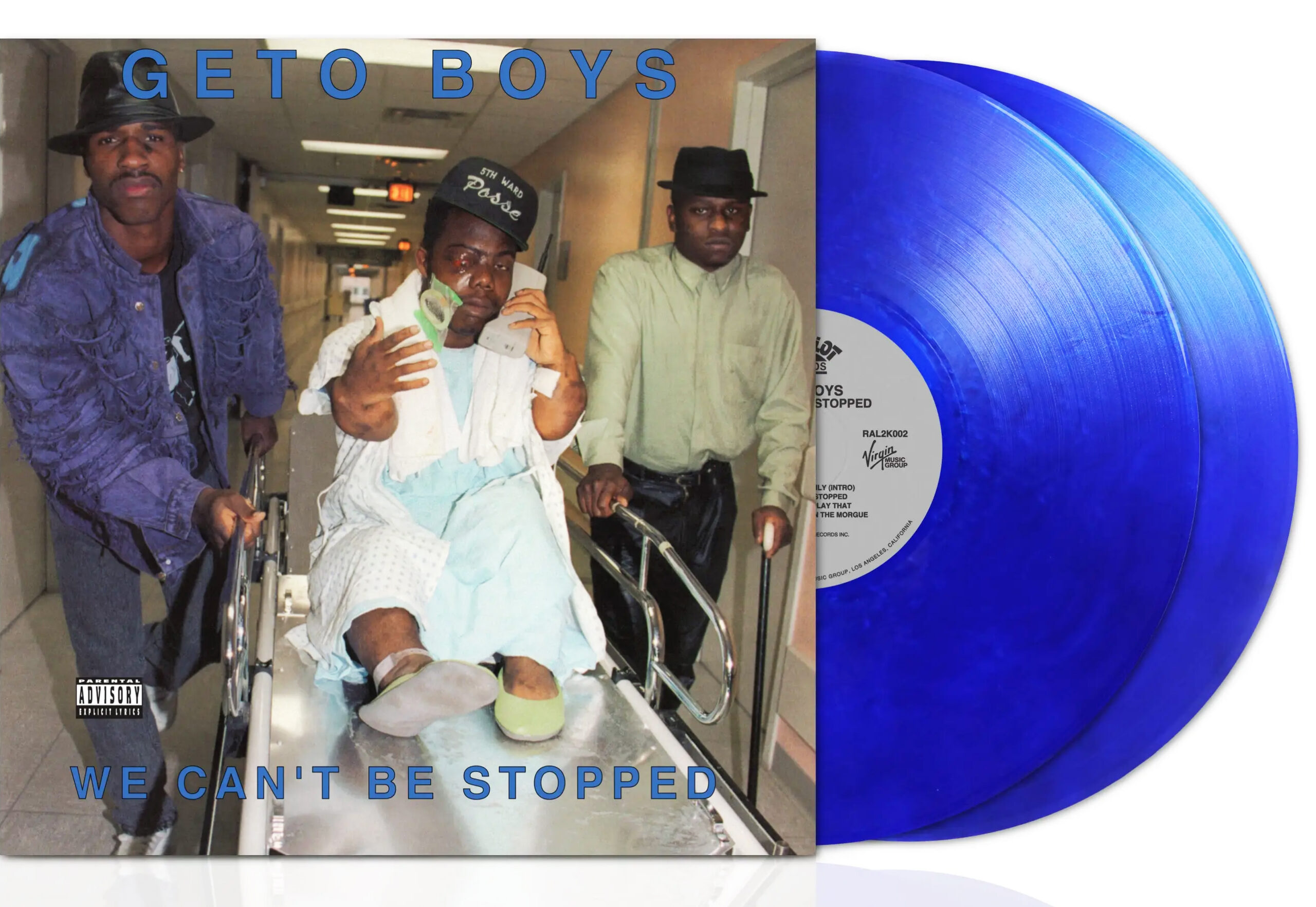
Since we lost him in 2019, the picture has stopped feeling like a dare and started feeling like something left in our keeping. Twelve inches of restored artwork is where it belongs. The jacket doesn’t display it so much as place it in your hands at full scale, and that asks something of you before a note plays.
We Can’t Be Stopped arrived in July 1991 as a flat refusal to accept that rap’s center of gravity belonged to a coast. Houston. Rap-A-Lot. James Prince. Three voices with nothing in common but nerve.
The production is filthier than I remembered, and I mean that as praise. The group handled most of it themselves alongside John Bido, Johnny C, and label boss James Smith—hard drums, sub-bass that rattles the shelf, horror-movie keys that never announce themselves. The chemistry is the engine: Scarface the novelist, Willie D the brawler who wants the argument, Bushwick Bill the pure id doing damage from the cheap seats. Nobody blends. That’s the point.
Fourteen tracks deep, each man takes three solo cuts, and DJ Ready Red, who walked mid-sessions, leaves one parting verse on the title track. My copy is the metallic blue 2xLP, 140g, and four sides give this mix room it has never had. Guitar and voice stop fighting for the same square inch, the bottom hits like a door slamming in the next room, and the side breaks land like chapter breaks.
“Rebel Rap Family” opens on Giorgio Moroder’s Scarface theme and sets the terms in eighty-two seconds.
“Fuck A War” is Bushwick Bill taking a call informing him he’s been drafted, laughing in the caller’s face, then refusing to die overseas for a country that wouldn’t cross the street for him. In 1991, with flags in every window, that took a spine most rappers didn’t have.
“Mind Playing Tricks On Me” is the mountain. That Isaac Hayes guitar figure loops like a thought you can’t put down, each verse tightening the screws. Scarface wrote three of the four, including the Halloween verse Bushwick delivers—and Bushwick turns it into something nobody else could have. On wax, the loop breathes. I got chills at the needle drop, and I’ve heard it a thousand times.
“Chuckie” is Bill at his most gleefully unhinged, written for him by Ganksta N-I-P after the two watched Child’s Play—cartoon menace over a beat that keeps a straight face.
“Ain’t With Being Broke” cuts to the economics running underneath everything else here, and it hits harder now than it did then.
“Trophy” closes the album with Willie D itemizing every award the group was never going to win, and the argument hasn’t aged a day.
The Diary, Scarface’s solo masterwork, returned to wax on June 19 as the first cornerstone of Rap-A-Lot’s 40th anniversary campaign. This is the second. Play them back to back, and the lineage is undeniable—the storyteller on one turntable, the group that made him on the other, one Houston label behind both for forty years. Anyone who cares where modern rap comes from needs this record in the room, not in a playlist.
Thirty-five years on, the title still isn’t a boast. It’s a fact.