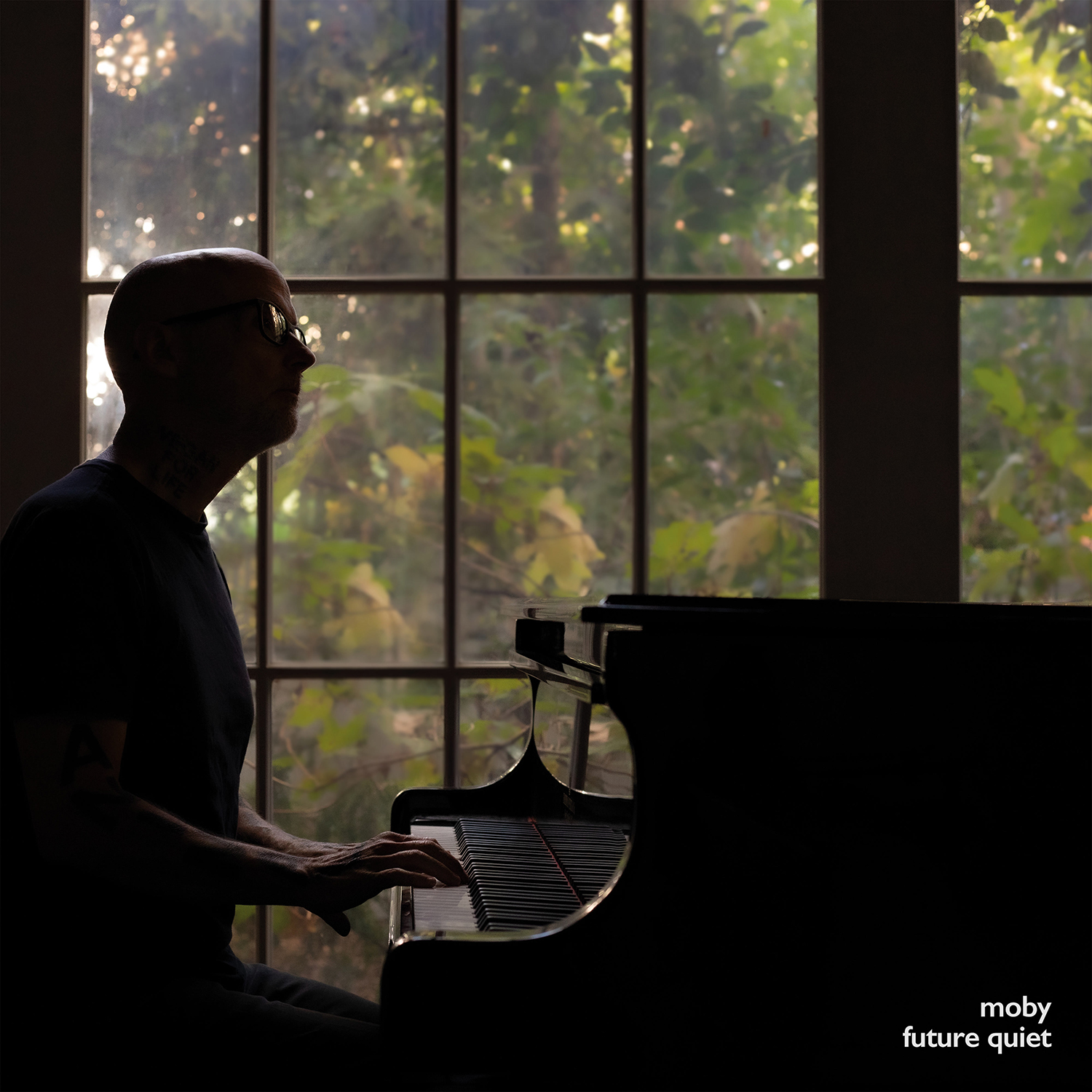
There is a particular kind of courage in a man who once set dancefloors ablaze, deciding at 60 years old, to sit down at a piano and simply stop moving. Moby has never been easy to categorize—rave architect, punk misfit, vegan provocateur, accidental pop deity—and that stubbornness to defy expectation is precisely why he remains essential. Twenty-three albums in, with Play still echoing across every coffee shop and car commercial that came after it, he has earned every right to follow the silence.
Future Quiet, released February 20 via BMG, is not a surrender. It’s a deliberate act of subtraction—and in 2026, with the world screaming at full volume, that restraint is its own kind is truly radical.
Strip out the beats, the samples, the euphoric drops. What you get here is Moby alone at the keys, augmented by strings, the occasional ambient synth wash, and a handful of guest vocalists deployed like brushstrokes rather than centerpieces. The production is hushed and deliberate throughout—pianist first, composer second, electronic artist a distant third. This isn’t ambient wallpaper. It breathes differently.
“When It’s Cold I’d Like to Die,” reworked from his 1995 Everything Is Wrong and freshly unearthed by Stranger Things—opens with Jacob Lusk (of Gabriels) delivering the kind of vocal that physically relocates you. Lush orchestral strings pool beneath him like rising floodwater, and I had goosebumps before the first minute passed.
“This Was Never Meant for Us” puts Moby’s own voice at the front, cracked and transmitted through some gauzy, distant filter, laid over spare piano and the occasional ghost of a synth chord. The restraint floors me; he lets the grief hover in the room without explaining it. “On Air,” featuring Serpentwithfeet, is the record’s undeniable peak. His elastic, gospel-kissed voice rides a slow string crescendo that builds and builds until it feels like the ceiling lifting off. I played it three times in a row.
“Mott Street 1992” is where the old Moby surfaces just enough to remind you that he’s still in there—dreamy breakbeats underneath lush synth pads, slow-rolling and nostalgic, a man looking back at the city that made him. “Le Vide” pulls spare piano upward into choral strings and what sounds genuinely like a heavenly choir, religious and unashamed about it. Arresting.
“The Opposite of Fear” closes the album in pure ambient drift: eight-and-a-half minutes of sustained synth tones dissolving into open air, no piano, no vocals. It doesn’t end so much as exhale.
Future Quiet is the record for anyone who has felt lately like the noise is winning. It’s for the Play devotees who followed Moby into every left turn he ever took, and for the new listeners who found him through a Netflix show and want to know how deep that rabbit hole goes. In a world of constant yelling, Moby chose to whisper—and I find myself leaning in closer than I have in years.
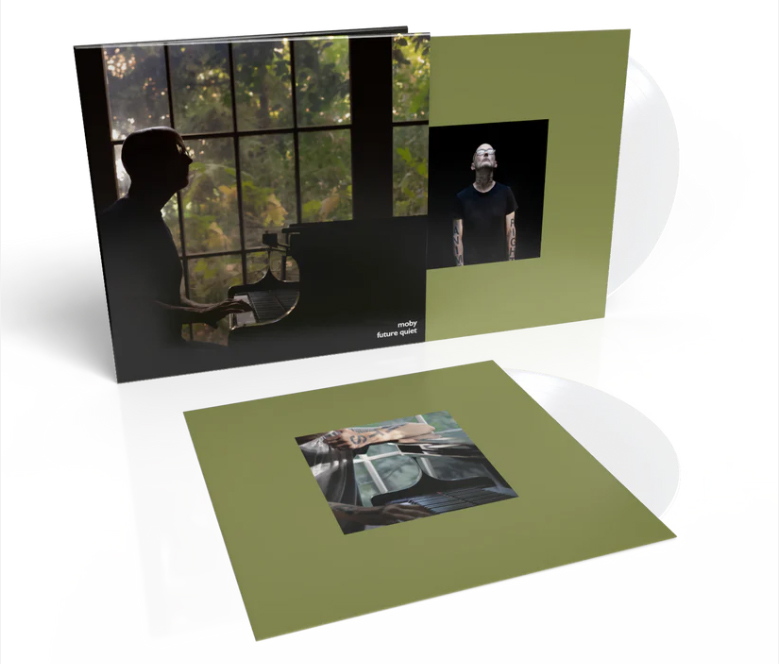
Moby’s Future Quiet will be available as transparent double vinyl on June 26, 2006. Click HERE to preorder.