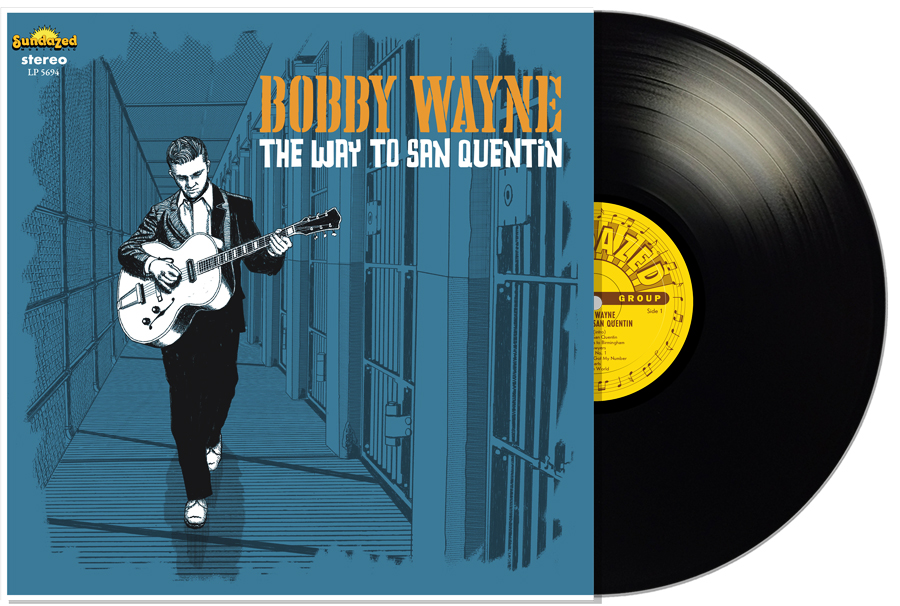
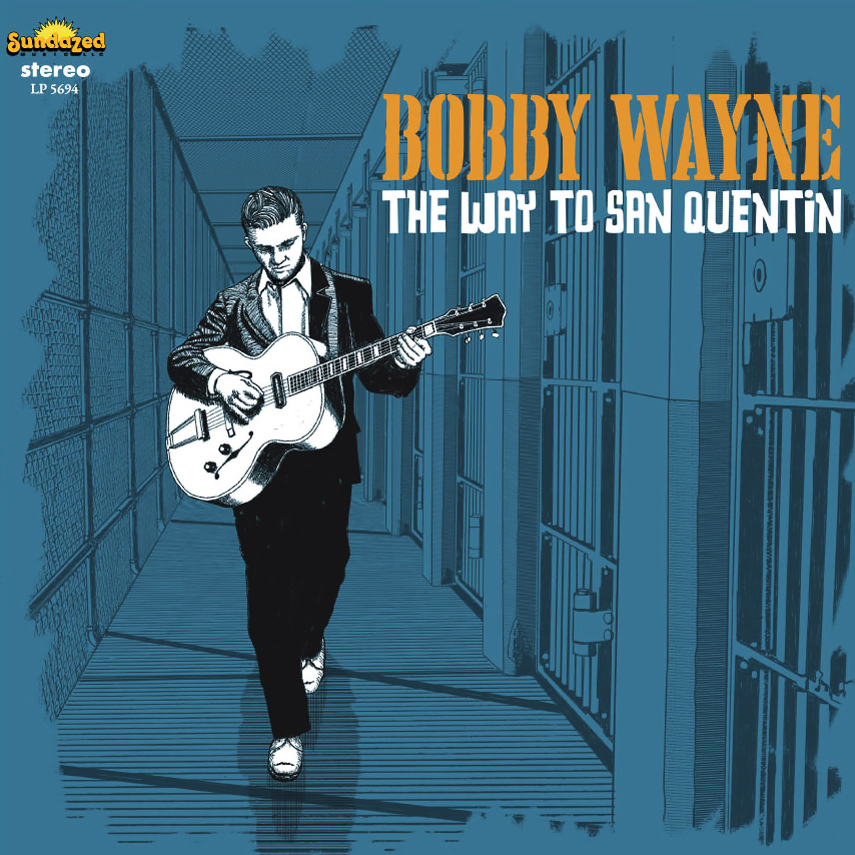
VIA PRESS RELEASE | Sundazed Music will release The Way to San Quentin, a career-spanning collection of gritty prison songs recorded by and largely written by Pacific Northwest rockabilly cult hero Bobby Wayne, on September 11. Available on LP and CD, the collection brings together largely unissued material showcasing Wayne’s unmistakable bass-baritone across stripped-down tales of outlaws, killers, gun-slinging women, and life as public enemy No. 1. The album is now available for pre-order.
 Though widespread stardom eluded him, Wayne never lost the spark that first drew him to the music. Preserved on reel-to-reel tape, the recordings collected on The Way To San Quentin capture an artist with a natural affinity for rockabilly’s most dangerous characters and darkest stories. From the title track and “Yuma Prison” to “Kill At The Lawyers,” “Public Enemy No. 1” and “Pistol Packin’ Mama,” Wayne inhabits a world of crime, punishment and hard luck with a voice built to tell the tale.
Born Robert Wayne Snyder in Spokane, Washington, in 1936, Wayne was an early force in bringing rockabilly to the Pacific Northwest, armed with a deep, resonant voice often compared to Johnny Cash and a sound that fused hard-driving rock ‘n roll with country storytelling. On The Way To San Quentin, that combination comes into sharp focus through a collection of murder ballads, prison laments and outlaw tales steeped in the darker corners of the American songbook.
Wayne was just 15 when he first picked up a guitar and 16 when he formed the Rocky Mountain Playboys. By 17, he had already ventured to Los Angeles in pursuit of a music career, only to be told by local clubs to head back home. Undeterred, he continued performing and recording, working with producers and country musicians while chasing the breakthrough that always seemed just beyond reach.
Even Wayne’s name may have worked against him. Throughout his career, multiple performers recorded and appeared under the Bobby Wayne moniker, including another “Bobby Wayne” marketed to rockabilly audiences. The confusion helped obscure the story of the Spokane-born artist whose recordings captured the raw electricity of rockabilly as it spread beyond its Southern birthplace and took hold in the Pacific Northwest.