

VIA PRESS RELEASE | Kishi Bashi has announced a 10th anniversary reissue of his critically acclaimed 2016 album, Sonderlust, which will be released on February 27th, 2026 via Joyful Noise Recordings.
 To celebrate, he’s shared the previously unreleased B-side “Harpsi Chords,” a song that captures the balance of melancholy, introspection, and searching optimism that defines his music. “I was always excited about this song, and went as far as to record the strings on it,” Kaoru Dill-Ishibashi, AKA Kishi Bashi, says of the song. “I don’t think it matched the tone of Sonderlust, and so it was a difficult decision to leave it off.”
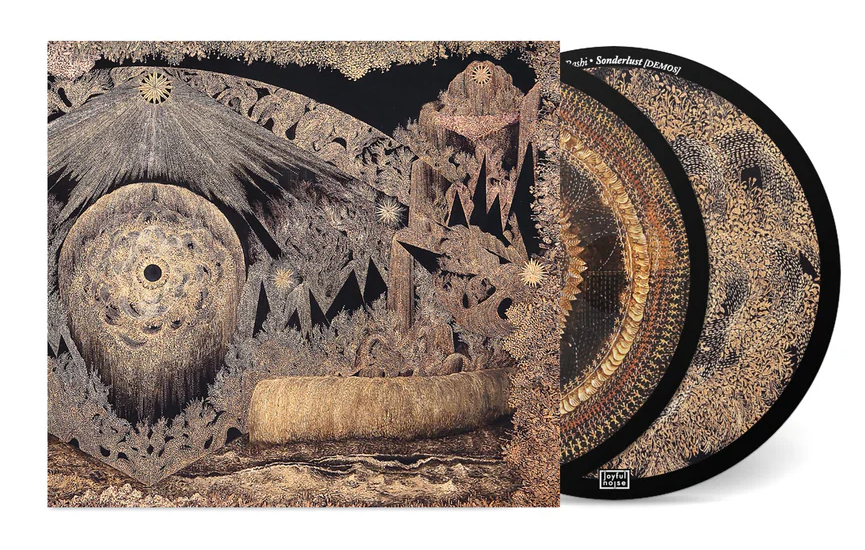
Now available for pre-order, the Sonderlust (10th Anniversary Edition) features updated artwork from Ssin Kim, the South Korean artist behind the original cover. “The first piece was called End of the Beginning. It was dark, pessimistic; about the end of life,” Dill-Ishibashi explains.
“The new one, made post-COVID, feels more optimistic. It’s interesting that she’s changed, just like I have. When you’re younger, the world can feel overwhelming. As you age, you start to see your place in it, become more pragmatic, less anxious. I think that’s what this new art captures, a sense of perspective, of hope.”
Last fall, Kishi Bashi announced a 2026 headlining tour around Sonderlust’s anniversary, during which he’ll perform the album in full. The run begins in late March with performances at Boise, ID’s Treefort Music Fest and Knoxville, TN’s Big Ears before taking him across the country—including an April 3rd stop at Chicago, IL’s Thalia Hall and an April 11th show at New York, NY’s Irving Plaza.
A decade ago, Kishi Bashi found himself emptied out. The success of his previous albums, 2013’s 151a and 2014’s Lighght, had turned him into a kind of orchestral ringmaster, his looping violin and buoyant melodies celebrated for their palatial brightness. But by 2015, after years of relentless touring, that brightness threatened to dim. He went to all his usual conduits of creation—violin loops, guitar, piano—and came up with the musical equivalent of fumes. “Touring and its accompanying lifestyle took a heavy toll on my soul and my family,” he recalls.
From that exhaustion came Sonderlust, an album that marked not just a stylistic shift, but a profoundly personal one. Gone were the ornate flourishes and the dizzying maximalism. In their place: analog warmth, vulnerability, and a spiritual candor. It was filled with the kind of startling emotion that Ishibashi never before allowed himself. “It was the beginning of me growing up,” he recalls. “Being comfortable expressing my heartbreak.”
If Lighght sounded like the inside of a kaleidoscope, Sonderlust was the other side of the rainbow: a record made in the twitchy stillness that follows upheaval. Its title, drawn from John Koenig’s Dictionary of Obscure Sorrows, refers to that formidable realization that every person and passerby carries a life as vivid and complicated as your own. Ishibashi took that idea to heart. “It’s about being inspired by your connection to everyone around you,” he says. “Realizing that every single person is at the center of their own universe. It’s a humbling feeling.”
That humility reshaped his music, too. Working with Chris Taylor of Grizzly Bear, Ishibashi set aside the baroque violin loops that had defined his earlier work and began exploring the textural possibilities of vintage synths: specifically, the Juno-106, a MiniMoog, and the Wurlitzer piano. “I wanted to create a more holistic body of work instead of just kitchen-sink energy,” he says. “Nothing says funk like a Wurlitzer.” The result was an album that shimmered with analog vibrance; soulful, strange, and defenselessly human.
Sonderlust feels both steeped in its era and timeless: a melancholy yet dancy album refracted through the digital nerviness of the mid-2010s. It remains the fulcrum of Kishi Bashi’s catalogue; the moment when his virtuosic playfulness deepened into something more grounded and humane. “Before, I made music that was fun and exciting to me,” he says. “This was more like catharsis for the struggles of my time.”
Ten years later, Ishibashi speaks about the album with gratitude and a slight sense of astonishment. “I’ve been very surprised at how much I’ve changed, what I now value as a musician,” he says. “I used to tour really hard. Now I look back and think, at what cost? But Sonderlust, that feeling of connection, of sonder, that hasn’t changed. It’s still what drives me.”
With an ever-evolving sound and a passion for cinematic storytelling, Kishi Bashi continues to break new ground as a storyteller and performer, captivating audiences with his unique blend of classical and popular music. He most recently released his fifth studio album, Kantos—a kaleidoscopic journey inspired by sci-fi, philosophy, and ancient ruins. His 2019 LP, Omoiyari (a Japanese word meaning compassion for others), and its accompanying documentary, A Song Film By Kishi Bashi: Omoiyari, explored themes of minority identity and the WWII incarceration of Japanese Americans. The film premiered at 2022’s SXSW Film festival, where it was acquired by MTV Documentaries and later earned an Emmy nomination for “Outstanding Arts And Culture Documentary.” It is now available on Paramount+.