VIA PRESS RELEASE | “Don’t play this in the car when you drive. The groove is so funky, you’ll wreck.” —James Brown
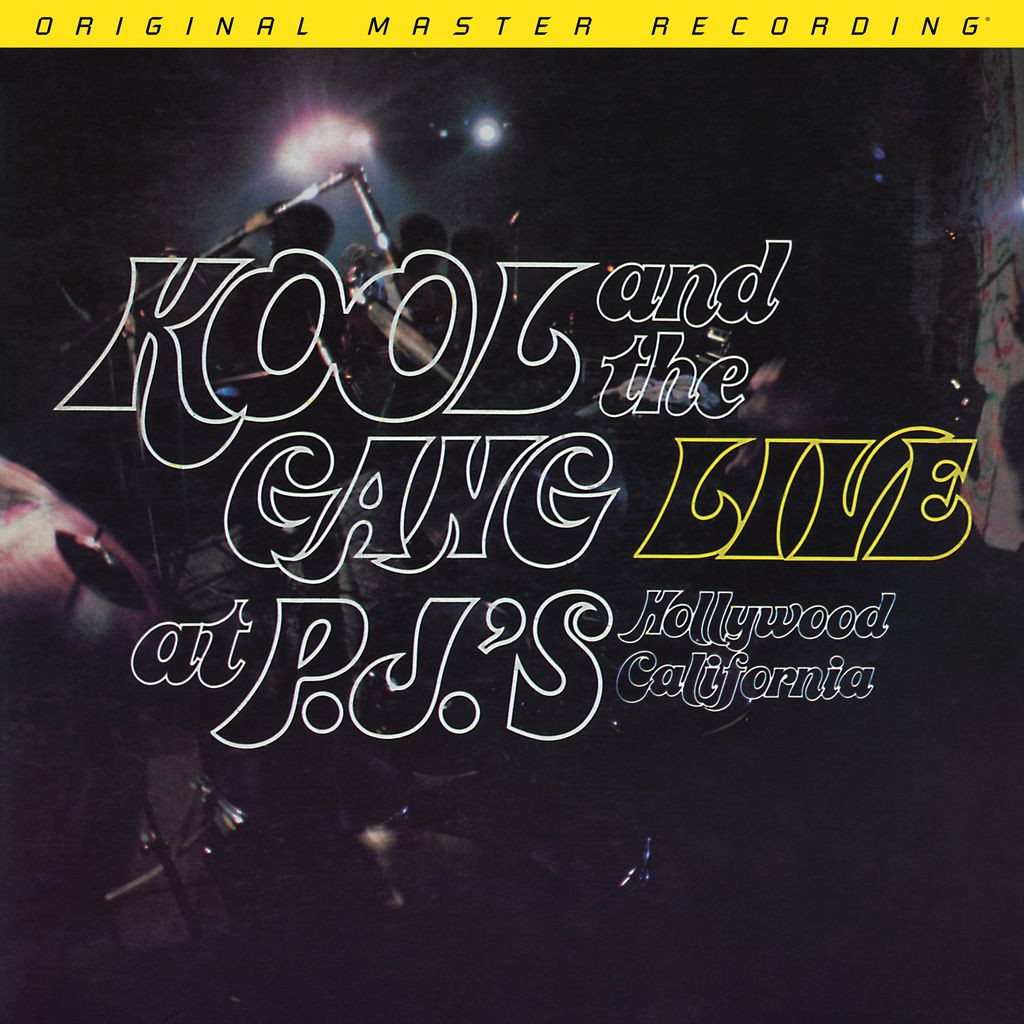
 Mobile Fidelity Sound Lab (MoFi), the leader in high-fidelity audio reissues, announces the first-ever audiophile vinyl release of Kool and the Gang’s exhilarating 1971 album, Live at P.J.’s.
Arriving March 20, the album is available for order at mofi.com as a numbered-edition 180g 33RPM LP limited to 2,000 copies. Sourced from the original analog master tapes (1/4” / 15 IPS analog master to DSD 256 to analog console to lathe), the record is pressed at Fidelity Record Pressing and housed in a premium Stoughton gatefold jacket.
Make it funky. Kool and the Gang do that and much more on Live at P.J.’s, a freewheeling concert album that preceded the resurgent soul-jazz movement by decades. Recorded at the Hollywood, CA, club on a late-May Saturday night in 1971, the wordless set demonstrates the boundless diversity and virtuosity of the septet—Robert “Kool” Bell, Ronald Bell, George Brown, Claydes Smith, Robert Mickens, Dennis Thomas, and Ricky West.
Compared to prior editions, this restorative reissue plays with deeper, tauter bass, enhanced definition, and more realistic presence. Everything from the brassiness of the horns to the snap of the snare and the rattle of the congas comes across in full-range perspective.
The newfound clarity underscores the lasting appeal of the band’s symbiotic chemistry, notably on the album-opening “N.T.” (shorthand for “No Title”), which includes one of the most famous drum breaks in history, later sampled by artists including Public Enemy, N.W.A, Nas, and Q-Tip.
The final LP of Kool and the Gang’s jazz-centric era, and the last set it released before the group gained a foothold on commercial radio, Live at P.J.’s cooks with excursions into tropical-flavored material (“Ricksonata”), romantic fare (an inspired take of the pop evergreen “You’ve Lost That Lovin’ Feeling”), Latin-leaning material (a cover of saxophone legend Charles Lloyd’s “Sombrero Sam”), and even pieces that could serve as film-score backdrops (“Lucky for Me”).
Throughout the journey, Kool and the Gang retain a crisp attack and clear sense of direction, its overall methodology best summed up on the aptly titled “Ronnie’s Groove,” penned by Ronnie Bell, who also functioned as the band’s de facto musical director. Highlights include the Isaac Hayes tribute “Ike’s Mood” and the upbeat, complex “Dujii.”