

PHOTO: MIKE WHITE | Urge Overkill, the Chicago rock band, isn’t exactly out on the road this summer. But it is celebrating the 30th anniversary of the remastered custom pink-and-purple vinyl reissue of Exit the Dragon, the double album recorded at the height of their success. It was also an album, produced by the Butcher Brothers, that might have signaled the end of the band, or at least the start of a 15-year hiatus until their next release, Rock & Roll Submarine, 16 years later, in 2011.
Band stalwarts Eddie “King” Roeser and Nash Kato got together to talk to us about the project (from New York and Chicago, respectively) to muse on what it all means in an era when rock has been sidelined. The conversation has been edited and condensed for clarity.
Was Exit the Dragon issued on vinyl when it first came out in 1995?
Eddie “King” Roeser: Yes, it did come out on vinyl. At the time, labels were not as interested in that, since vinyl cost a lot more, and this was a double album. We didn’t intend it to be, but once it reaches a certain length, you can’t squish everything into one record without compromising the sound.
That was a bone of contention with the record company, which meant they would have to make it a double record. And we were quite happy about that. But at the time, we had the juice to push it through. At that time, people were transitioning so heavily away from vinyl that you had to have some juice to even get your record out on vinyl. At that time, we did, and once we realized it was going to be a double, we were happy, because we could do our gatefold. Every band dreams of having a gatefold.
Nash Kato: But they wouldn’t give us the gatefold. I think we went to that well one too many times. We got the green light for the vinyl double record, but then we said the album has got to have a gatefold sleeve. And I was disappointed. Because who doesn’t clean their weed on a gatefold album? I used always to clean mine with ZZ Top’s Tres Hombres: you open it up, and there’s that crazy Mexican fiesta.
The colored vinyl is new, right?
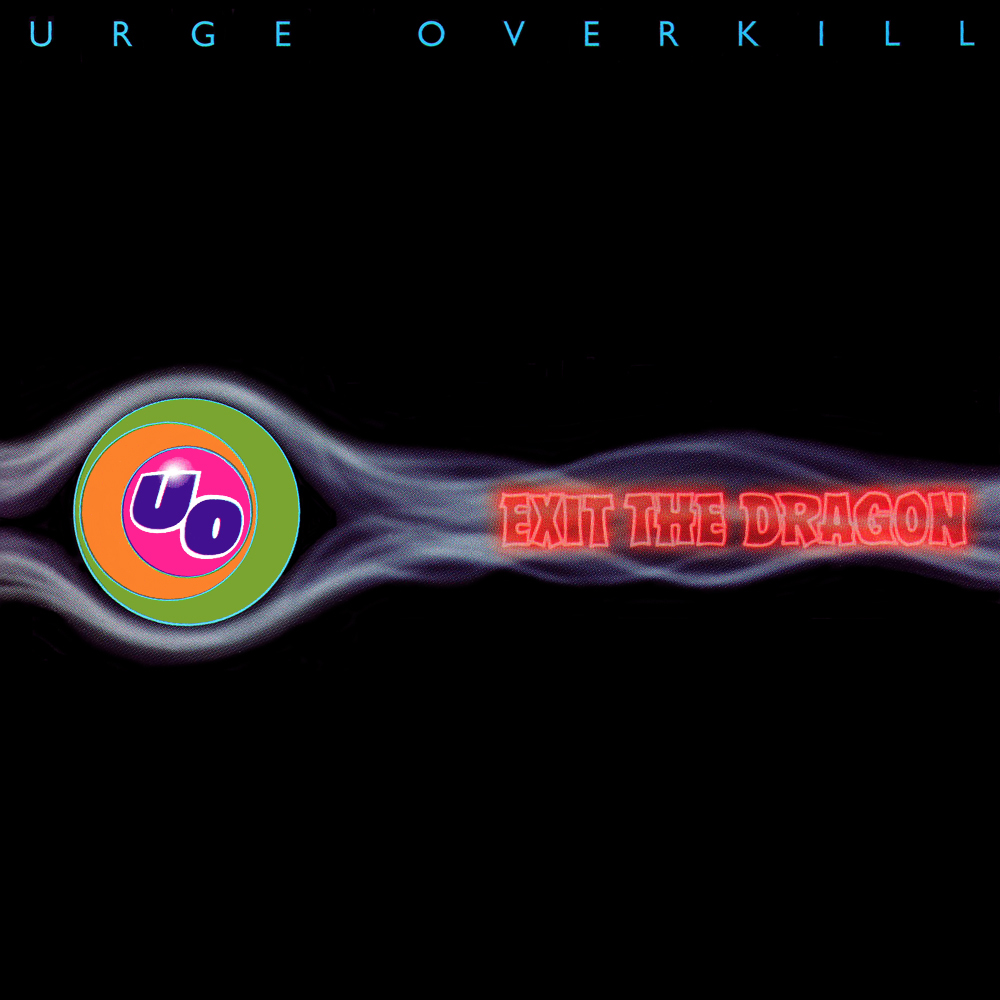
Roeser: Yeah, that wasn’t a big thing yet then. So we picked out the pink and purple. The main cover has these pink and purple overtones with the UO ball, so it vaguely corresponds with pink and purple for each record.
Kato: Which was the chromatic theme of the album.
It was your highest charting album. Why was it your last one for more than a decade?
Roeser: Well, we had what would be called a classic internal meltdown. You watch Inside the Music; it’s like a Greek myth. Very few bands don’t have a flameout. I think our flameout was, forgive me for this comparison, was almost Beatlesque, where you’ve got two, almost three songwriters involved. The bands that function most smoothly, like a machine, have a dictator and loyal soldiers. And we had three dictators in our band, or two and a half. And as the stakes get higher, and things begin to boil, and the thing that you did as a passion, now is a business, and there are corporations involved and marketing. We never dreamed that the thing would become as big as it did.
We naively wanted to take over the world, of course. We definitely had ambitions that were unrealistic enough—we were able to make fun of them ourselves. But when they came to pass, beyond our expectations, we hadn’t really prepared for that. And some of the stakes being raised caused, I guess I would say, some creative differences. It was less about what Urge Overkill is, or what music we liked or thought was good; it was more about all the things surrounding it.
The time passed incredibly quickly, given the years involved. Like, in 1991, we were rehearsing in this horrible cinderblock basement thing we could barely afford. And in 1993, they were flying us out to be on David Letterman. So your life changes at a time when you’re very young, so very quickly. We were enjoying the ride so much, things just went out of control—just off the rails. I mean, it was off the rails. No one would ever accuse us of being careerists, let me put it that way.
Kato: Drugs played a major role in that. It overtook the band. Again, a sad rock cliche, but nonetheless.
Roeser: Part of the story is we felt like the record was a document of a very dark time, as opposed to Saturation, which was free of notoriety. Everything was ahead of us; our dreams were coming true, but we were on a course we didn’t know where it led, and that was a very celebratory experience. And I think it reflects in the music and feel of the record that it was fun, and we were having a lot of fun. Things can turn around so quickly. I guess there was some sense that we should redo Saturation and keep going with the happy-go-lucky Urge that everybody loved and we loved. I guess we weren’t feeling that optimistic. I think the record successfully reflects a less unified, more scattered sense of what the band was about.
Kato: And isolated.
Roeser: Nash would be in the front studio doing a song, and I’d be on the other side of the building doing another song that was pretty much my territory. And then Blackie [Onassis] would come in the middle of the night and find someone to work with to do his stuff. It got pretty disparate. I think the results were very cool. But it was due to the circumstances of having two and a half working studios that we were able to indulge. Maybe it would have been better to have one tiny studio where we could all sit together and hash out our shit.
I’m not proud we didn’t do what a sane band would do now. At the time, it wasn’t even considered that you would take a month off or something like that. Nobody in the industry considered that some downtime might be advantageous. In hindsight, after the various things that happened on tour and with our drummer Blackie, may he rest in peace, I think it would have been a wise choice for us.
Kato: We wouldn’t have made it had we pushed forward. It’s funny, too, because everyone just assumed we were dropped by the label, which was far from true. We had a two-record extension that we opted out of. We had to throw in the towel. I remember Eddie, you said once in an interview, ‘If I tried to continue in the band, and tried to make another record and tour, I’d be dead.’ You weren’t being hyperbolic about it. We all had one foot in the grave at that point.
Roeser: I think if we had gone ahead as a trio to make another record, I believe I said I thought somebody was going to die…
It was what it was, and we were able to live to tell the tale. Blackie wasn’t the only drummer we had on records playing for us, so for the most part, the team was Nash and me. That wasn’t the problem so much that we were going to lose our drummer. I think it was the sense that Humpty Dumpty had fallen off the wall. At the time, we couldn’t imagine getting back together, which we did successfully 10 to 15 years later.
Kato: The other thing is, most people assume we showed up with all the early ’90s bands. But we were hitting it hard for 10 years straight, from 85 to 95. I mean, hit it hard, lived hard, so the majority of our fans thought we just had two records. But the two on Geffen, we didn’t know it at the time, was the culmination, I guess [of] … an almost freakish pace.
Roeser: Yeah, that was our life. I don’t remember there being much of a break in between. You’re living in a box, for the most part, with two other people. Part of our semi-disillusionment with Exit the Dragon, having worked so hard for so many years, is that tension builds up. And, unlike Metallica, we didn’t have a therapist to come in. I believe that actually would have been helpful. But that’s not our style.
Kato: We had to step off, regrettably. I think we all regret it. We were burning white hot all that time, but we had to step off that ride. As Ed said, we never really had a break. We needed a break from each other, the lifestyle, everything. It was the only cure for all that for us. But in retrospect, it would have been great to have continued the way we were.
What’s it like to have a remastered Exit the Dragon reissued in this way all these years later?
Roeser: I know all music is available at any time. But the vinyl coming out gives us a good time and a reason to talk about it and maybe re-imagine and re-notice it. I was shocked when I was told yesterday that Urge has reached 1 million monthly listeners on Spotify, which is pretty good for a band that’s basically not active. Something in the musical taste of the algorithmic gods means people are finding the music. In a sense, we’re more popular than we’ve ever been, which makes no sense. But that’s a fact, based on the number of ears turned in.
Kato: I never thought of it like that. But I think you’re right.

And it’s important that it’s on vinyl?
Roeser: To me, if you go through the trouble to get the physical object and put it on, wait for the song to start, it does trick your brain into thinking: this is an event, rather than a background. I’m sitting at home with a stereo. You may be doing something, and if I put on a platter, it is intentional.
It really takes me back to being a kid, when that was the activity in my room. Listening to a record was a 100% fulfilling, pure-enjoyment experience. You weren’t doing something else at the time—or I wasn’t. You weren’t walking around with a Walkman yet or doing something else. My activity was listening to music and maybe playing guitar along with it, though usually not. But that kind of forces people for whom music has always been something that happens over to the side or in the background. The intentionality of placing the needle and having it physically come out of a thing—it’s miraculous. I’m glad that it’s become popular again.
I shouldn’t be surprised because it’s so fun. Most people my age take for granted that there’s a physical aspect to music; it didn’t just come in like magic. It’s an analog process.
We’re very much of the age where the entire model of how music was recorded, distributed, and listened to changed within a few years, just like that. It’s unthinkable for us. We wanted to make music. And there are some boombox pioneers out there who made records in their bedrooms on boomboxes and things like that. We weren’t going to thrive without getting into a studio. And that was costly, required planning, and required intent, where you didn’t have infinite time. You may have had a studio for two days, and if you didn’t execute and make your decisions, your record was going to suck. You weren’t going to be able to do it over.
That resulted in some great music. In our case, it forced us to make some inspiring decisions, and when we look back, we think, ‘how did we do that on the first take?’ But maybe people have lost the realization that usually the first takes and the early inspirations when you’re pressed for time, and you don’t have the luxury of thinking about things—that’s where the juice is, especially with music.
Often, the first few jumps at something. Even if you take something like bands who could have their own studios, like Led Zeppelin or the Stones, they didn’t work on their shit 60 times. They did a song in a day. They wrote it, they did it, and what you hear is the first, second, or third time the song was ever played.
Like, “Black Dog” is not something that sat around. It’s probably the first time they did the song. You hear that.
Our records were made that way. Something is lost when fiddling in your bedroom with 50 different files, trying to decide which one is the best. I’m glad we were able to do the majority of our music, up to and including Exit the Dragon, in that environment where studio time is precious and you didn’t just jerk around because it was free. It very much wasn’t. And it makes for more interesting listening. And if that’s old-timey, so be it.
Kato: Old school.
You talk about the band not being active. What are you guys up to?
Roeser: For the moment, I would have to say we’re resisting intense pressure from all sides to go out and cash in massively on the trend of “Everything ’90s is Hip.” Which I thought started years ago and would end, but it hasn’t. But yeah, we have offers for cruise ships and sorts of crazy things where you do these one-offs. Nash, would you say we’re weighing our options?
Kato: I’d say so.
Roesser: I wouldn’t say a battle plan is not at the top of mind. I felt like we’ve always had pride in our quality control. We’re not a band to go out there because a, we can, or b, we must. We certainly can, but we need not. And I do get the feeling that some of these people are out there because they’ve got nothing else going on. I guess people are satisfied to hear it. I guess most people want to hear songs that they know. I can understand that. That’s a massive hook for promoters to find bands that have known songs.
That was the model of popular music for years and years. And since the culture has been atomized to the point where so few people know any one song, that’s hurt the major concert industry. I guess I have to say we were fortunate to have been playing at a time when there was more of a monoculture. That was good for us—that there were a few places where we could get music and tastemakers. We find ourselves in a completely altered landscape. I’m aware this is nothing new, and this has been the case for 10 years, I suppose.
I meet so many younger people who ask where I am or what’s going on. I find it helpful to say, ‘Oh, we were around in the ’90s when rock music really mattered. If you could believe it, it was an incredibly powerful cultural force, and everyone had strong emotions about it, and it really meant something.’ At least now, obviously, especially guitar music has become background music that you hear during football games and TV commercials. Just the sound of rock has been devalued and has become part of the background noise.
I’m not going to rail against history, but it wasn’t a situation where there were the sounds of rock guitar everywhere in the background. We were very excited about bands engaging. Hip hop was literally being invented as we were recording our records. It was clear to us that’s where the action was, and we started doing what we could, without co-opting or being obvious, just trying to remain current and aware of where some of the action was, which was switching from guitar-based or pop-based rock to hip-hop. That was really an exciting time. We were far more excited about hip hop than grunge, I think.
But the band today?
Roeser: Nash and I are still active in the studio as live musicians. We’re not actively planning not to play. There are always offers coming through. We have an agent, and we have an operation. It’s still a breathing organism.

The 30th anniversary reissue of Exit the Dragon is available through Porterhouse Records.
PHOTO ABOVE: JEROD HERZOG