Celebrating Kenney Jones on his 77th birthday. —Ed.
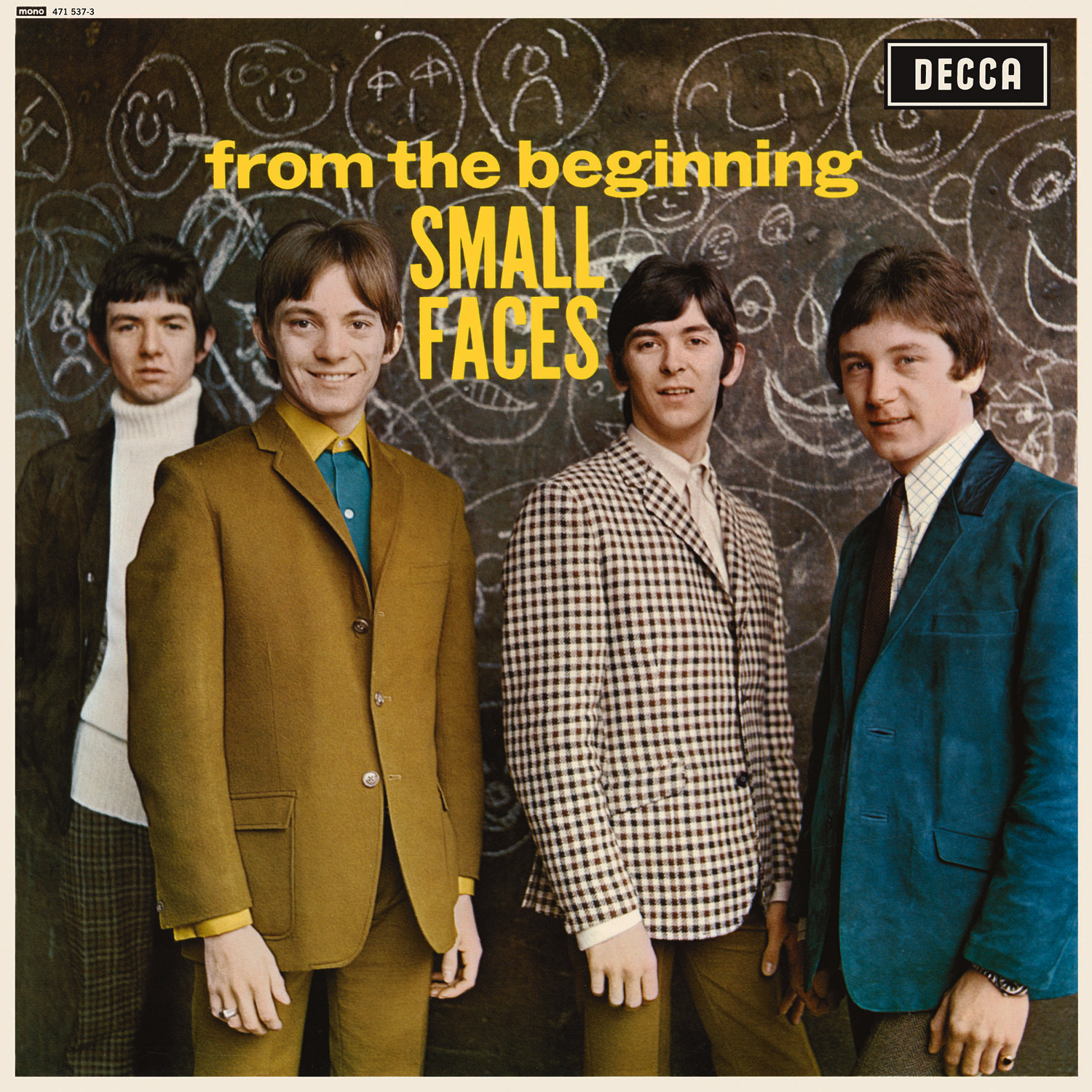
Small Faces stand as one of the very finest groups of the 1960s, though many know them mainly for Ogden’s Nut Gone Flake, their most ambitious and final album before Steve Marriott’s departure effectively ended their diminutive phase. The scoop is that all of the Small Faces’ ‘60s records are worthy of ownership, even the mercantile odds-and-ends collection From the Beginning. That disc and its self-titled predecessor are currently available as 180gm replica LPs. Are they cut to lacquer from the original quarter-inch production masters with front-laminated sleeves? Why yes indeed.
 One gauge of the true greats is that the music manages to get better, or at least maintains a high standard of quality, as the discs take their place in the racks. So it is with the Small Faces. With this said the Decca period offers distinct and enduring appeal; more so than The Who, the Small Faces circa-’65-’66 are the true ambassadors of Mod. Utterly Brit in orientation, it wasn’t until the fourth LP that the group entered the US market.
The Small Faces consisted of Steve Marriott on vocals, guitar and harmonica, Ronnie Lane on bass, Kenney Jones on drums and percussion, and initially Jimmy Winston on keyboards. Upon signing to Decca through the efforts of manager Don Arden, they released two singles in ’65. The first “What’cha Gonna Do about It” charted, hitting #14, while the second “I’ve Got Mine” didn’t. Shortly thereafter, Winston was replaced by Ian McLagan, the new keyboardist assisting 3rd 45 “Sha-La-La-La-Lee” in reaching the #3 spot. A full-length followed a few months later.
Sporting the brass to open with “Shake” in Sam Cooke’s tempo, ’66’s Small Faces starts out strong and never really falters, which is impressive for a debut comprised roughly equally, as was the norm of the time, of originals and borrowed/cover material. Neither tentative nor betraying instrumental greenness, the Small Faces were also unburdened by conflict over what they wanted to be.


 The enduring stream of adulation awarded to Wire’s debut Pink Flag can mask the fact that the esteem wasn’t instantaneous. As the printed observations in these CD books helps to clarify, the band was strikingly distinctive as part of the whole ’77 punk shebang, as they garnered a pocket of fervent advocates, including then Sounds writers Jon Savage and Jane Suck, but overall, Wire existed as just one outfit amongst many, and this lack of a microscope of expectation surely allowed for creativity to flourish without the hinderance of unnecessary pressures.
 Flossmoor, IL | Records and Recliners: At this Flossmoor shop, you can transform your turntable and living room. Delete your Wayfair app and press pause on the “Hanging Out & Relaxing” playlist you’ve had on repeat. At Conservatory Vintage & Vinyl, a combination furniture boutique and record shop in downtown southwest suburban Flossmoor (1042 Sterling Ave.) that husband and wife Tony and Chogie Fields opened in 2019, you will find already-assembled, one-of-a-kind pieces to lounge in and spin-worthy vinyl that will beat any algorithm. Browsing the home collection here is like stepping into a mid-mod coffee-table book featuring works from a who’s who of era designers, including an Eero Saarinen–concepted IBM executive chair and a Jens Risom wood cabinet. The music section is
  Dothan, AL | Big sound, small town charm: Inside Dothan’s unsung music scene: …From classic country to blues and modern rock, music has long been a part of Dothan’s story, and it’s only getting better. Several downtown murals bring the city’s musical legacy to life, highlighting its ties to iconic performers. Whether you’re planning a quick getaway or an extended stay, Dothan makes it easy to fill your weekend with great food, local charm, and, of course, live music… Dothan Nurseries’ Record Room: If you aren’t into the live music crowds, spin some vinyl in the Record Room at Dothan Nurseries. Choose from an extensive collection of


 The LPs of Blue Note’s classic-era are aptly described as an embarrassment of riches. Along with loads of amazing music, there is of course the surrounding context, and engaging with the fruits of the imprint’s labors offers a truly enlightening historical narrative. Naturally, it’s only part of jazz’s larger story, but it’s also a highly valuable component since Blue Note is an example where respect for the music trumped pure capitalistic desire.


 Rochester, NY | ‘Mission accomplished’: Record Archive celebrates 50 years of business. It’s become a destination for entertainment media, and, namely, vinyl records. Rochester’s Record Archive is celebrating 50 years in business this month. …“It’s like I had an ‘aha’ moment and decided to go for a booth that was all records. That was the 16th of September and off we went,” said Storms. In 1975, Storms brought some records to a flea market booth in Rochester. A few years later, he would go on to open Record Archive on Mount Hope Avenue. The business has since evolved into a city fixture, housing thousands upon thousands of records, movies, CDs and more in a 13,000 square-foot storefront off of East Avenue. “I’m kind of a hoarder, and the name of the store is really the mission statement. The mission was to become an archive of recorded media and
  San Francisco, CA | The best dinner party in San Francisco is thrown at this bistro and vinyl bar: A new chapter begins in Mission Creek as Side A opens in the former Universal Café space. A boisterous restaurant and vinyl bar has opened its doors in San Francisco’s Mission Creek neighbourhood, occupying the same space the beloved Universal Café once did. Aptly named Side A, the site seeks to turn up the volume on Midwestern hospitality, giving American crowd-pleasers an international spin. Styled as a contemporary bistro, Side A exudes a retro-futurist aesthetic. The concept was brokered by Studio Ahead—a local design practice—which introduced husband-and-wife duo Parker and Caroline Brown, who now run Side A, to the venue’s owner Jim Skånberg. ‘We had recently met them at one of their pop-up events and were attracted to the energy they created by

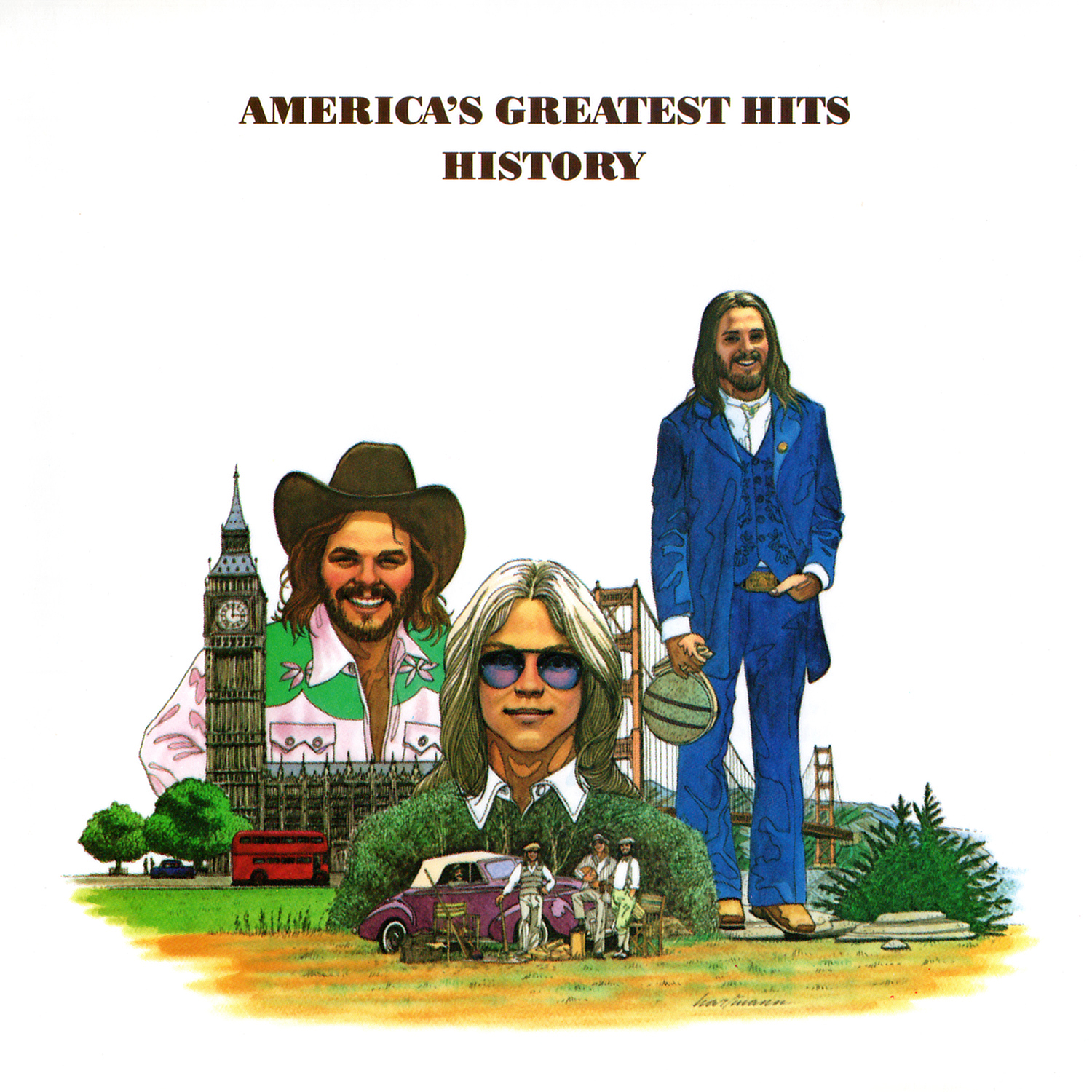
 Personally, what has always pissed me off about the song is the band’s claim that the horse has no name. That’s balderdash. Of course the horse has a name. It may not be Trigger or Mr. Ed or Black Beauty, but it’s something. Vocalist Dewey Bunnell was probably just too lazy to ask the horse its name. “I’m Conway,” the horse would have replied. Or, “I’m Luther, good to meet ya.” Of course the horse could have offered Dewey his name. But a horse has its dignity.
 Bob, also an artist and spent many years working for Andy Warhol, producing silk screens until his death. He has been a passionate member of New York’s art and music scene since the early ’70s.