 Black Friday Record Store Day is right around the corner. If you’re planning to come home with a stack of new wax, it might be time to think about what you’re going to spin it on.
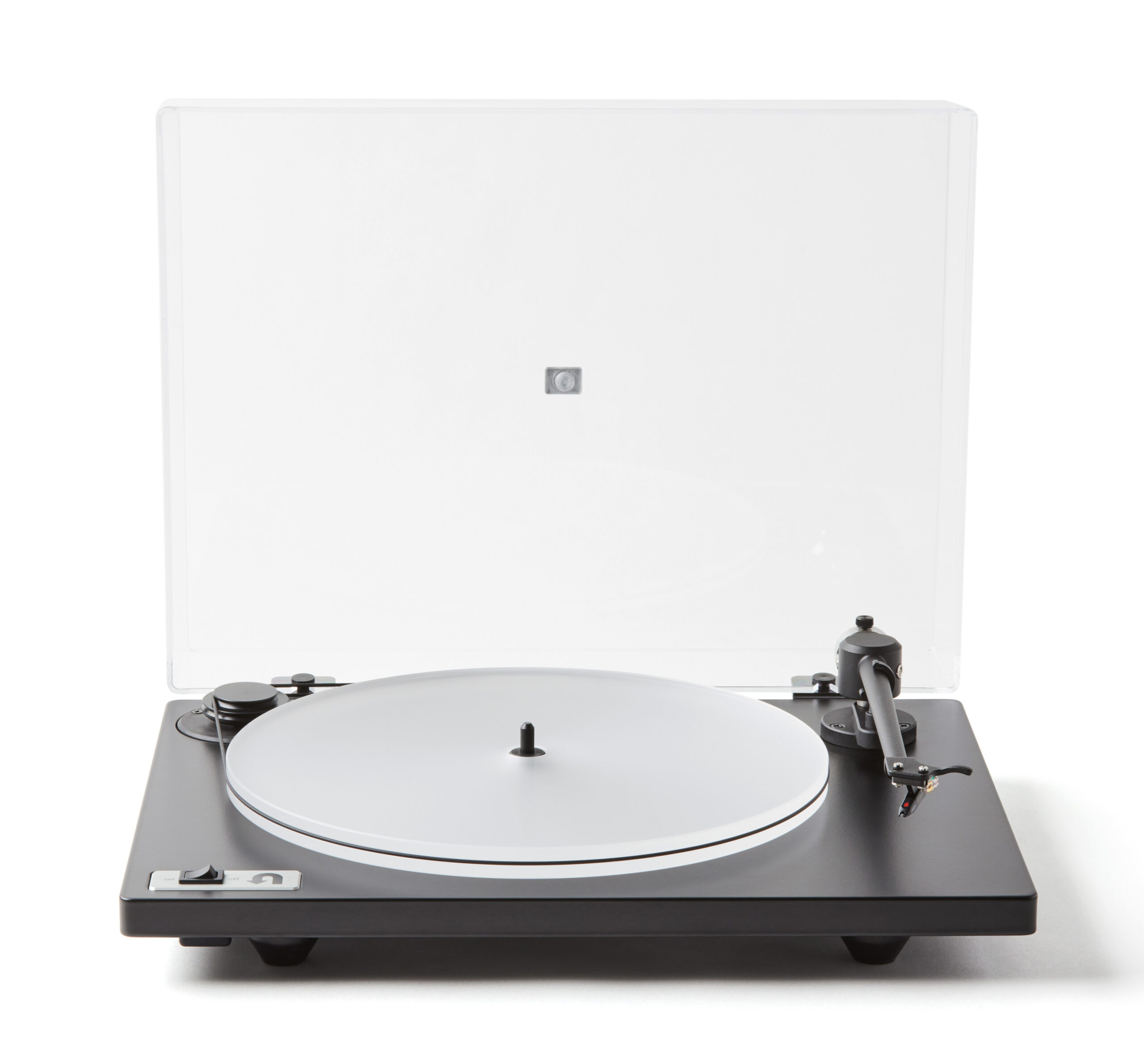
 I’ve been living with U-Turn Audio’s Orbit Plus for the last few weeks, and I’ll say it up front: this turntable changed how I listen to records. It doesn’t do more than the table I had before. It asks more of me, and it gives more back.
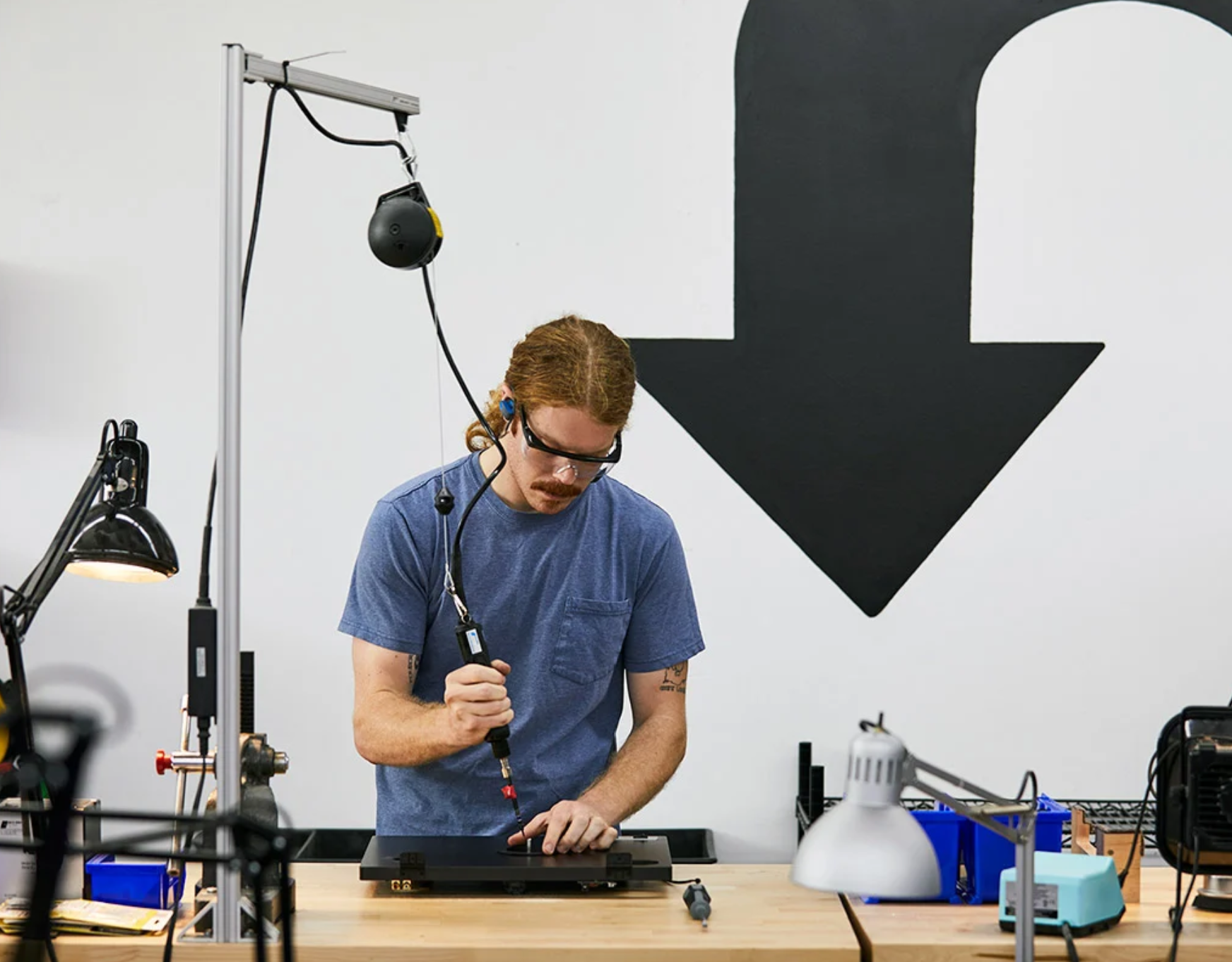
U-Turn is a small outfit out of Woburn, Massachusetts. Ben Carter, Bob Hertig, and Peter Maltzan started the company in 2012 with a simple idea: build a turntable that sounds great, looks great, and doesn’t cost a month’s rent. More than a decade later, every Orbit is still put together by hand in their shop.
Ben sent me the Orbit Plus in black with U-Turn’s own Pluto 2 phono preamp built in and an Ortofon OM 5E cartridge, which sells for $479. If you already own a preamp, skip it and the price drops to $399. Most people stepping up won’t own one, though, and with the preamp built in you can run the Orbit straight into a pair of powered speakers. No extra box, no extra cables.
Opening the box felt like getting something from a friend, not a factory. No fluff, nothing wasted, just everything packed tight and safe. Sitting right on top was a handwritten note thanking me for my business and telling me how to reach them if I ever needed help. When’s the last time a piece of gear did that?
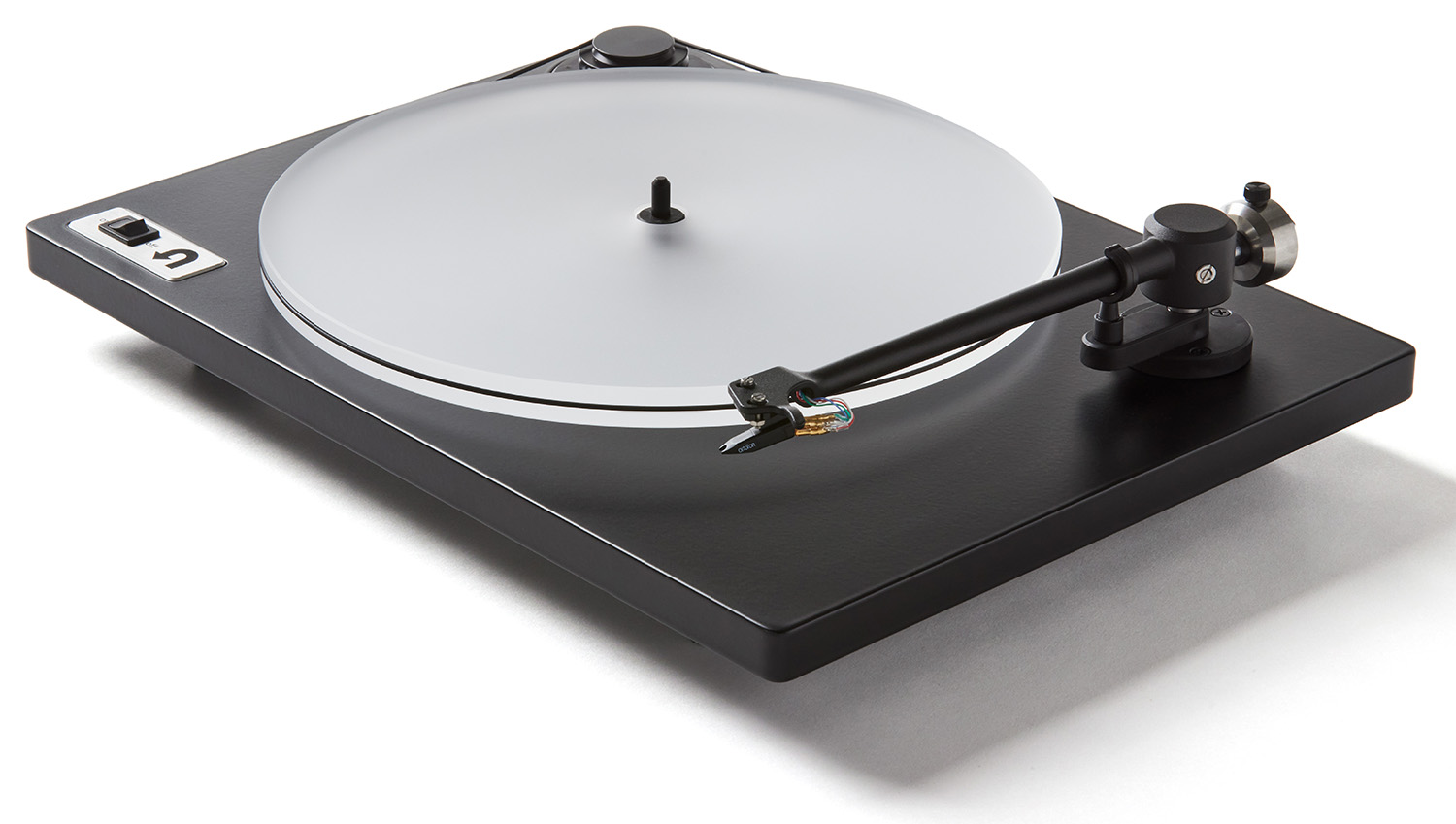
U-Turn mounts the cartridge and balances the tonearm before the table leaves Woburn, so setup is about as painless as it gets. Set the platter on, loop the belt, plug in, done. Fifteen minutes, start to finish. The frosted acrylic platter is thick and solid. The OA3 tonearm, with its one-piece magnesium arm, feels precise in your fingers. And the exposed belt drive just looks cool sitting on the shelf.
Here’s what you need to know before you buy: the Orbit Plus is manual. All of it. You switch it on yourself. You go from 33⅓ to 45 by moving the belt to the other step on the pulley. You cue the tonearm by hand. And when a side ends, the arm stays right where it is until you walk over and lift it.
Coming from an automatic table, that took me a few nights to get used to. Now? I wouldn’t change it. Every side turns into a little ritual. Pull the record, drop the needle, sit down and actually listen, then get up and flip it. That’s what vinyl is supposed to feel like.
For most of my listening, I ran the Orbit’s built-in preamp into my Schiit Midgard. The Midgard drove the same pair of Audio-Technica AT-SP3X powered speakers I used in my Audio-Technica review earlier this year. Same speakers, different turntable, so I knew exactly what I was hearing. For critical listening, I switched to my Ultimate Ears Premier in-ear monitors, plugged straight into the Midgard.
To really put the Orbit through its paces, I picked a record I know note for note: Dream Theater’s Metropolis Pt. 2: Scenes from a Memory. It’s a 77-minute concept album that will keep you up flipping sides, and it throws just about everything at a turntable.
Good lord. On the SP3X speakers, the layering in Mike Portnoy’s drumming jumped right out at me. The album swings from quiet, tender moments to absolute thunder, and the Orbit kept up with every turn. John Myung’s bass came through crystal clear and purposeful, every note exactly where he meant it to be. And James LaBrie’s vocals sat right up front, carrying all the passion and vulnerability this story needs.
Then I put in the Premiers, and the album opened up even more. Every instrument and sample had its own space in the mix. You can hear exactly what the band and their engineer were going for on what I’d rank among the greatest progressive concept albums ever made. So clean, so deliberate. Paired with the Premiers, the Orbit Plus showed me this record in a whole new light.

I rounded things out with a few records I come back to all the time.
The Cars, The Best of The Cars — Greg Hawkes’ synth riffs were the star here: precise, quirky and unmistakably his. People love to point out that Ric Ocasek and Benjamin Orr sound almost alike, and there’s some truth to that. But with everything this cleanly separated on the Orbit, I could tell who was singing every time. “Moving in Stereo” was a treat, with Hawkes’ synths drifting across the soundstage just like the title promises.
Moby, Everything Is Wrong— This one reminded me why the record mattered so much when it came out. The Orbit lets Moby’s range shine as he moves from electronica to house to ambient to straight-up punk. Big, pulsing tracks like “Feeling So Real” hit with real punch, and the quiet ambient pieces held on to every soft texture.
System of a Down, Steal This Album! — Here’s where vinyl’s natural warmth earned its keep. A record adds a little body to the sound that you just don’t get from a stream. With a band this aggressive, that fills out Shavo Odadjian’s driving bass and puts real meat behind Daron Malakian’s wild, unpredictable riffs. It hit heavier, and it sounded more human.
Across every record, the Premiers told the same story: a quiet, black background between tracks, clear separation in the mix, and production details I’d never picked up on before.
The Orbit Plus isn’t my first turntable. My everyday table has been Audio-Technica’s AT-LP70X, and I still love it. It’s automatic and Bluetooth-ready: put on a record, push a button and enjoy. That’s exactly what plenty of listeners want, and there’s nothing wrong with that.
The Orbit Plus is a different kind of animal. I’d put it at the top of entry-level rather than true mid-range, but it feels like a step up the second you touch it. It’s sturdier, and the acrylic platter seemed to lower the background noise. U-Turn rates wow and flutter at under 0.125%, and it shows. You give up automatic play and wireless.
In return you get a hand-built American turntable with an upgraded platter and tonearm, and a reason to sit down and pay attention. You can also swap the cartridge down the road, so the Orbit can grow with you as your ears get pickier. Both tables have their place. They just fit different moments in a collector’s life. Full specs are on U-Turn’s website.
If you’re ready to stop just playing records and start really listening to them, the Orbit Plus is an easy one to recommend. It’s built by people who obviously care, it sounds clean and warm, and at $479 with the preamp it won’t wreck your holiday budget. U-Turn backs it with a three-year warranty, which tells you how much faith they have in what comes out of that Woburn shop. Give it a week. You might not want to go back.
Black Friday Record Store Day lands on Friday, November 27. Get out to your favorite shop, show those folks some love, and bring home something worth dropping the needle on.